

Highway 40 from El Salto to the Sierra Crest is world-renowned among motorcyclists for its scenery and endless curves. Nicknamed Route 666 for its danger and the Road of 3,000 Curves for its sheer twists, it’s drawn me here for the pure passion of riding, leaving art, culture, cities, food, and society aside for one day.
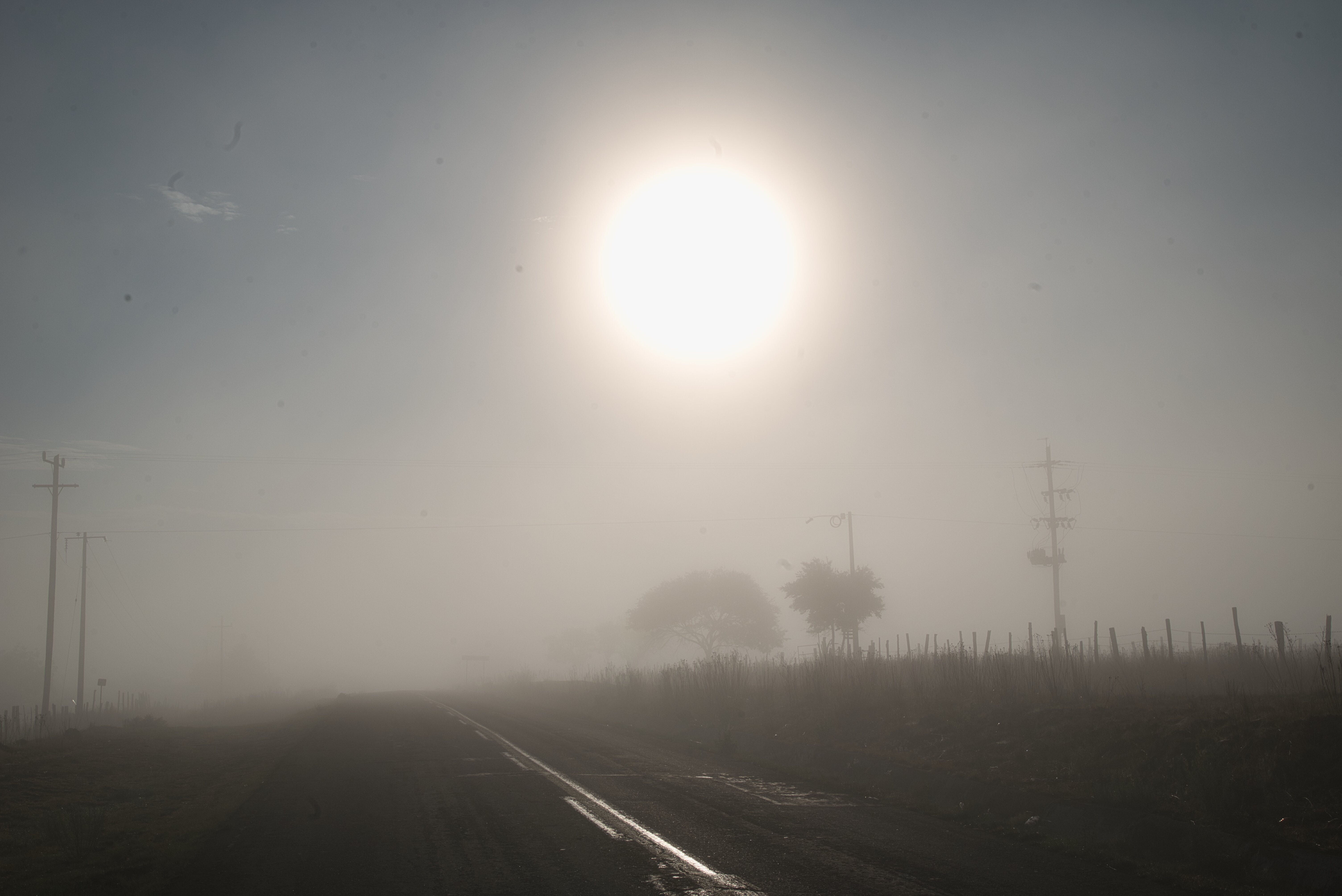
It was a bucolic ride out of Durango on the high plateau at 1,880 meters (6,200’), riding in and out of dense patches of fog as the sun broke over the horizon. It wasn’t long before I was riding in the Sierra Madre pine forest, and what a forest it is.
I arrived in the lumber town of El Salto. About 30% of Mexico’s lumber comes from Durango, and this place sits at the center of it. I saw no clear-cutting—no active logging at all—but a steady stream of logging trucks.
This is all ejido land, and their forestry system is called selective cut. The forest stays standing and looks intact from the road, even when it’s being actively harvested. What you notice instead is the wood — the mills, the stacks, the trucks — more than any visual scar on the landscape. The ejido model, at its best, creates an incentive to keep the forest productive rather than liquidate it (not very corporate-like!). Durango’s forest ejidos are actually studied internationally.
I need to leave El Salto behind and get to the curves. But first, a police checkpoint. As usual, I was waved through, which is common for motorcycle riders. I have a highly honed bullshit tactic that helps, too. I slow down far in advance of the checkpoint. I have a modular helmet that lets me pull up the chin guard and lift my visor, exposing my entire face. I continue slowly and try to convey something between respect and innocence. It works. A lot better than coming in hot, yelling “ Buenos dias, and waving like a mad jackal. I’ve seen this, especially the four-wheeled type. We aren’t here to make friends, and our mouths are shut.
It wasn’t long before the road started to narrow and the turns more frequent. This was the relaxed opening of the big ride. Shortly, it became more dramatic. It was painfully evident that man, machine, and mule loads of dynamite had to brutally carve out a roadbed on impossibly steep mountainsides. Just how many died? Physically demanding, danger with every blast, and sometimes the mountain just gave way. Not everybody returned home.
I saw fog a little way ahead and thought “Well, that’s the end of the vistas”. And I was right, but what I got wrong is what made the ride even more thrilling. The fog would suddenly enshroud the entire road; around the next corner, it would retreat. A mystical and challenging ride, all senses on full alert. One never feels more alive. Later, I learned I’d been riding through a cloud forest.
Stopping to take photos on this narrow road was taunting death, but what the fuck, I may never return.
I observed that the road had been rebuilt around huge boulders that had come crashing down. I’m impressed when a boulder is so big that the best option is to build a permanent detour around it.
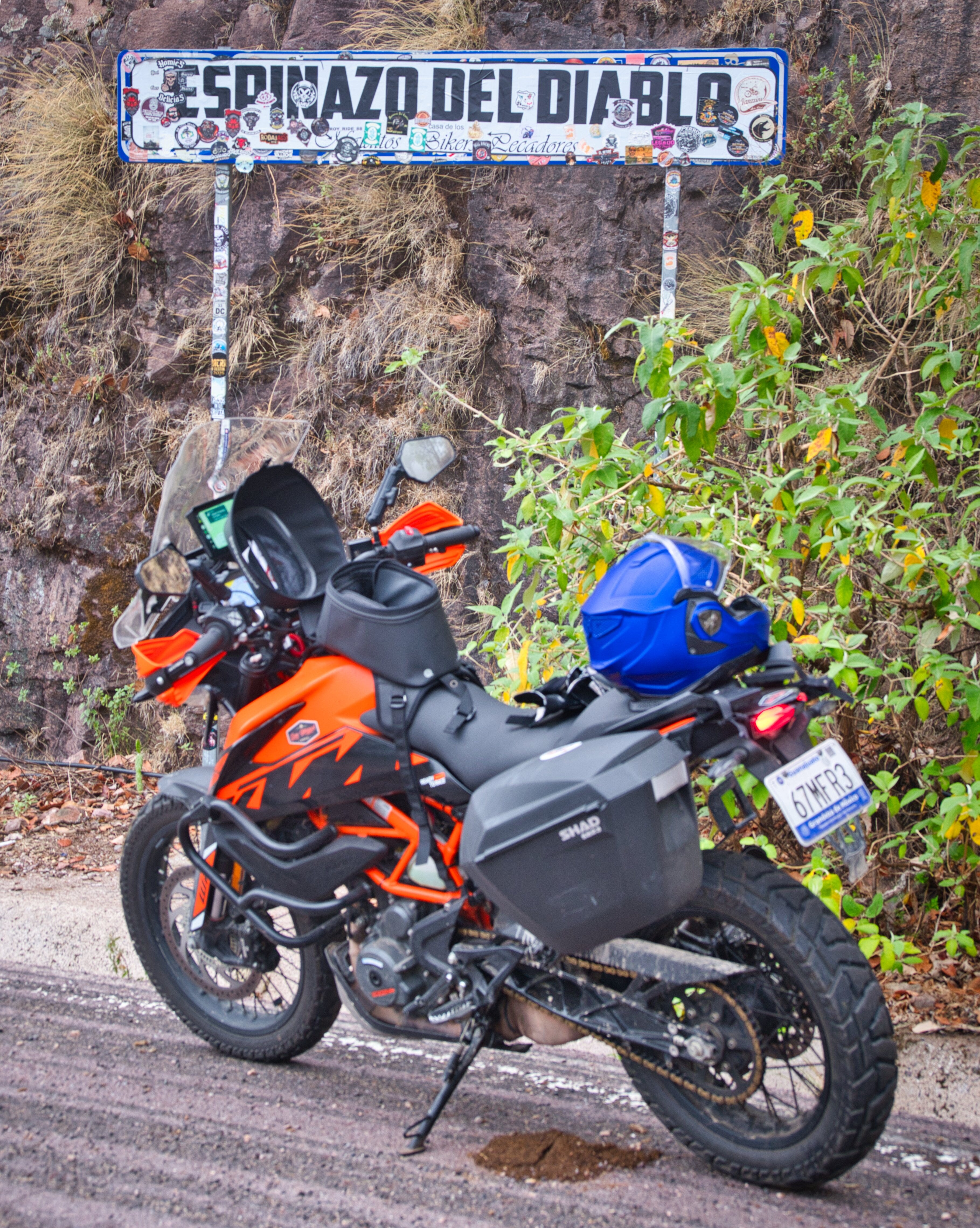
I was between 2,000 meters (6,500’) and 2,744 meters (9,100’) at the Sierra crest, with the famous Espinoza del Diablo viewpoint at 2,440 meters. There was no mirador today, but I didn’t care. All that mattered was the road. That 10km spine section alone has approximately 2,000 curves.
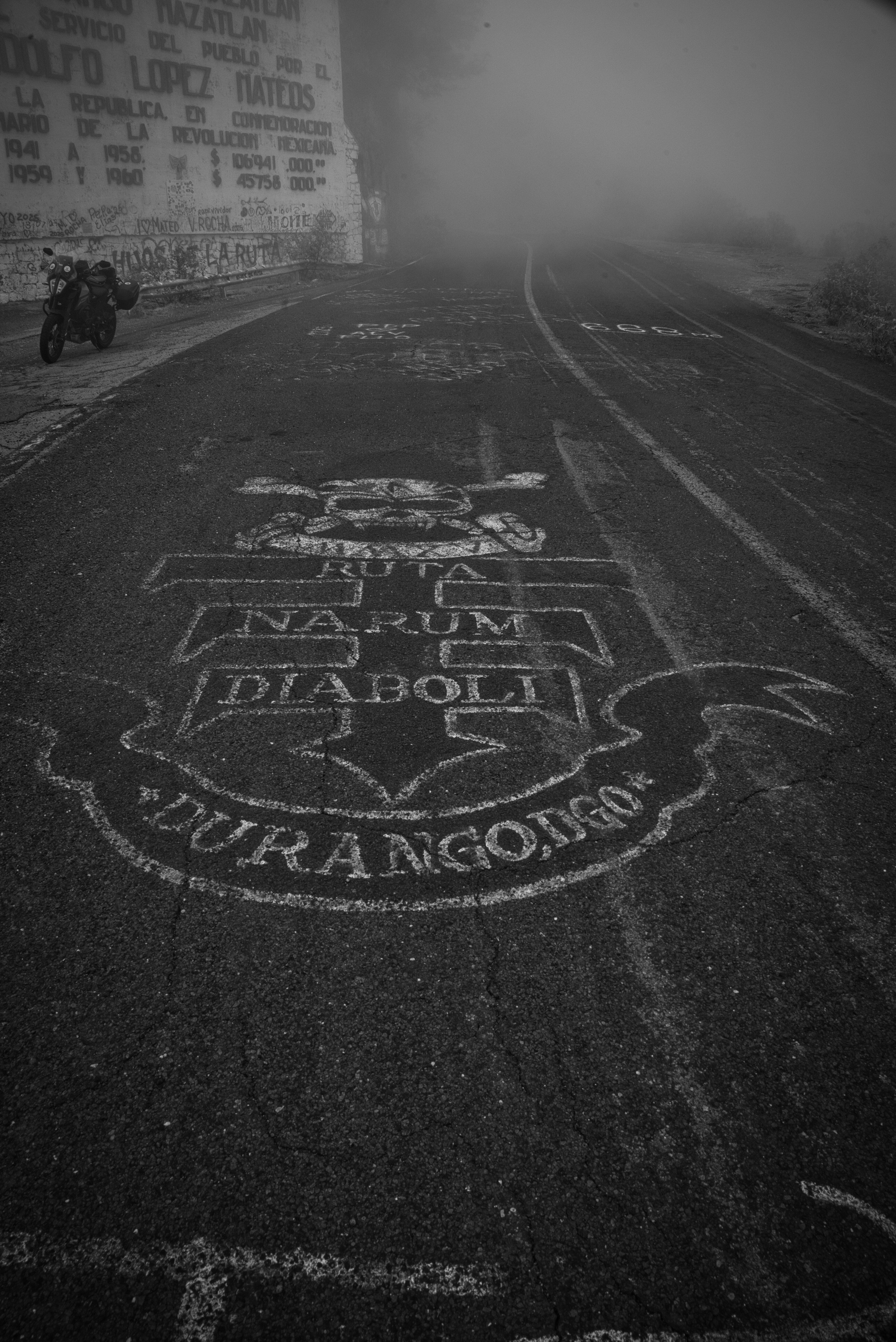
Riders pay respect at the López Mateos sign mirador. Most of the tributes are written in chalk on the road surface — rider names, club logos, 666, and so on. Ever see a car driver do that? They would be committed
.
I first heard of this road in the nineties, when guidebooks called it the “Ribbon of Death” and advised against travel. Now, having ridden 340 kilometers, I found it every bit as dramatic and inspirational as promised. And they still don’t want you to ride it. Much better to be at the pool with a fruity drink.
Note 1: This was all about motors and me riding this dream road. No excessive orange moto photos going forward. Thanks to all the non-moto people for your understanding and patience.
Note 2: In 2013, this road was bypassed by Mexico 40D, a 131-mile-long toll road featuring 115 bridges and 61 tunnels, for $1.5 billion. The crown jewel of 40D is the Baluarte Bridge with a total length of 1,124 meters (3,688 feet) with a central cable-stayed span of 520 meters (1,710 feet). At 403 meters (1,322 feet) above the valley below, the road deck makes it the highest bridge in the Americas. But it’s not much fun.
GRINGO SIGHTINGS: Zero; guess the Devil’s Spine is not on their bucket lists.
Tomorrow: Pre-dawn ride to Chupadero