

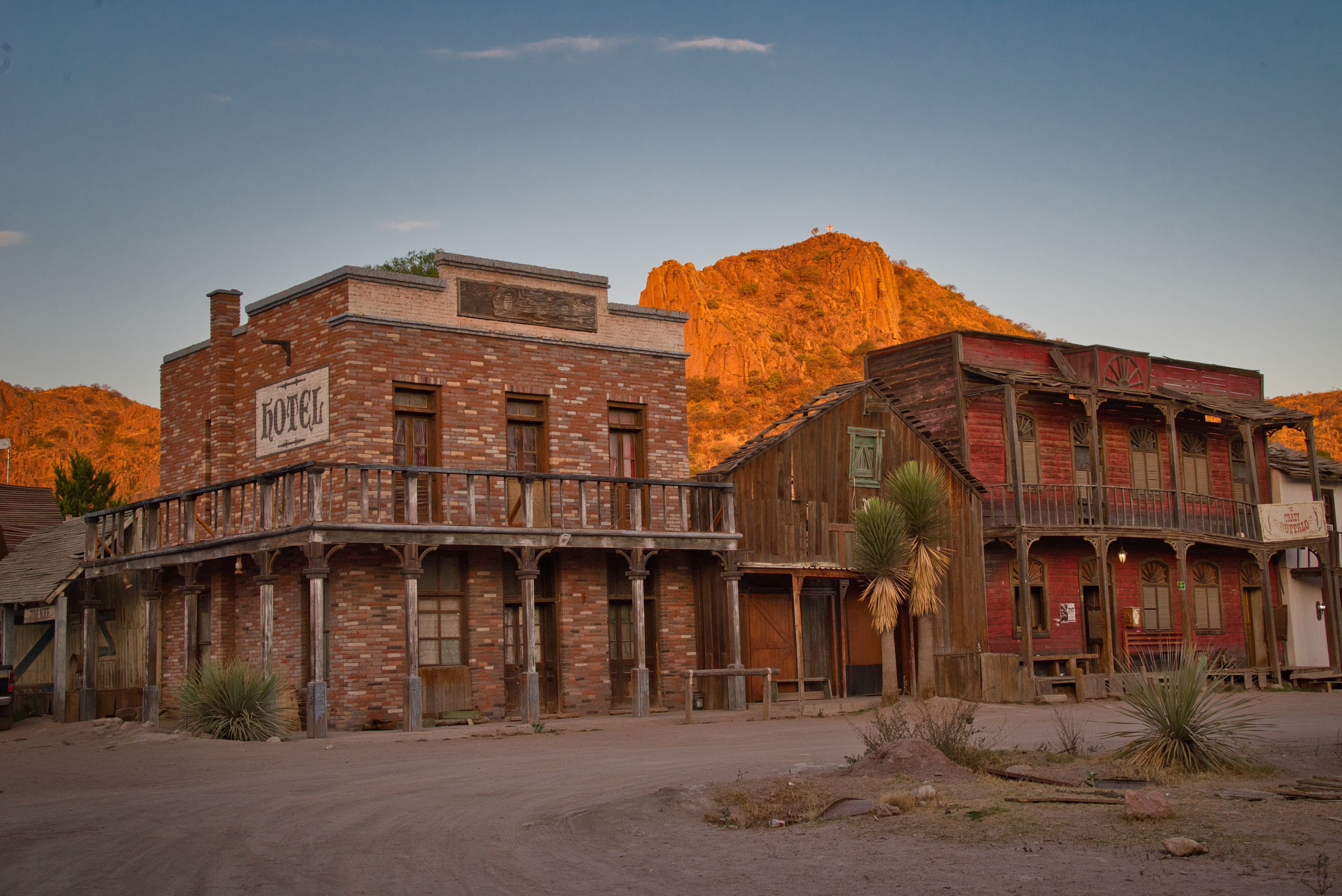
This morning, the opening bell was at 4:45. Caustic as it was, even the hotel’s Overnight Tar Coffee wouldn’t be enough jolt at that hour. And why would I do such a foolish thing? To capture the first morning light as it hits San Vicente de Chupadero.
Years ago, on a whim, I started watching classic western movies, never having seen them as a kid. I fell for the cinematography and rugged landscapes, promising myself I’d one day visit the filming locations.
In 1954, an American producer chose the Chupadero valley to shoot White Feather (with Robert Wagner, Jeffrey Hunter, Debra Paget), launching Durango’s Western era and its first sets. Ironically, most classic American Westerns were actually shot in Mexico. I won’t get political, but you can.
As I rolled north out of Durango in the pre-dawn light, I rounded a corner, and the perfect scene opened up, lightly moonlit. Semi-desert, low hills, open sky, classic northern Mexico “western” country.
The heart of Chupadero is a purpose-built Western main street: false-front saloon, jail, bank, church, general store, stables, gallows, and assorted frontier facades, with real houses, a school, shops, and the village church wrapped around it. Today, the film set is in various states of decay: some facades patched by locals, others leaning, peeling, or empty. And that was what I was here to see.
Over the next two decades, more than 130 productions used Chupaderos and nearby landscapes as filming locations. John Wayne basically became the unofficial patron saint; sources note he insisted on filming his Westerns here, helping turn Durango into “La Tierra del Cine” and putting serious money into the town and local extras. Besides Wayne, there were Steve McQueen, Yul Brynner, Charles Bronson, James Coburn, Burt Lancaster, Charlton Heston, Paul Newman, Anthony Quinn, and plenty of Mexican movie stars. The village didn’t exist in 1954; locals built it around the set as productions increased.
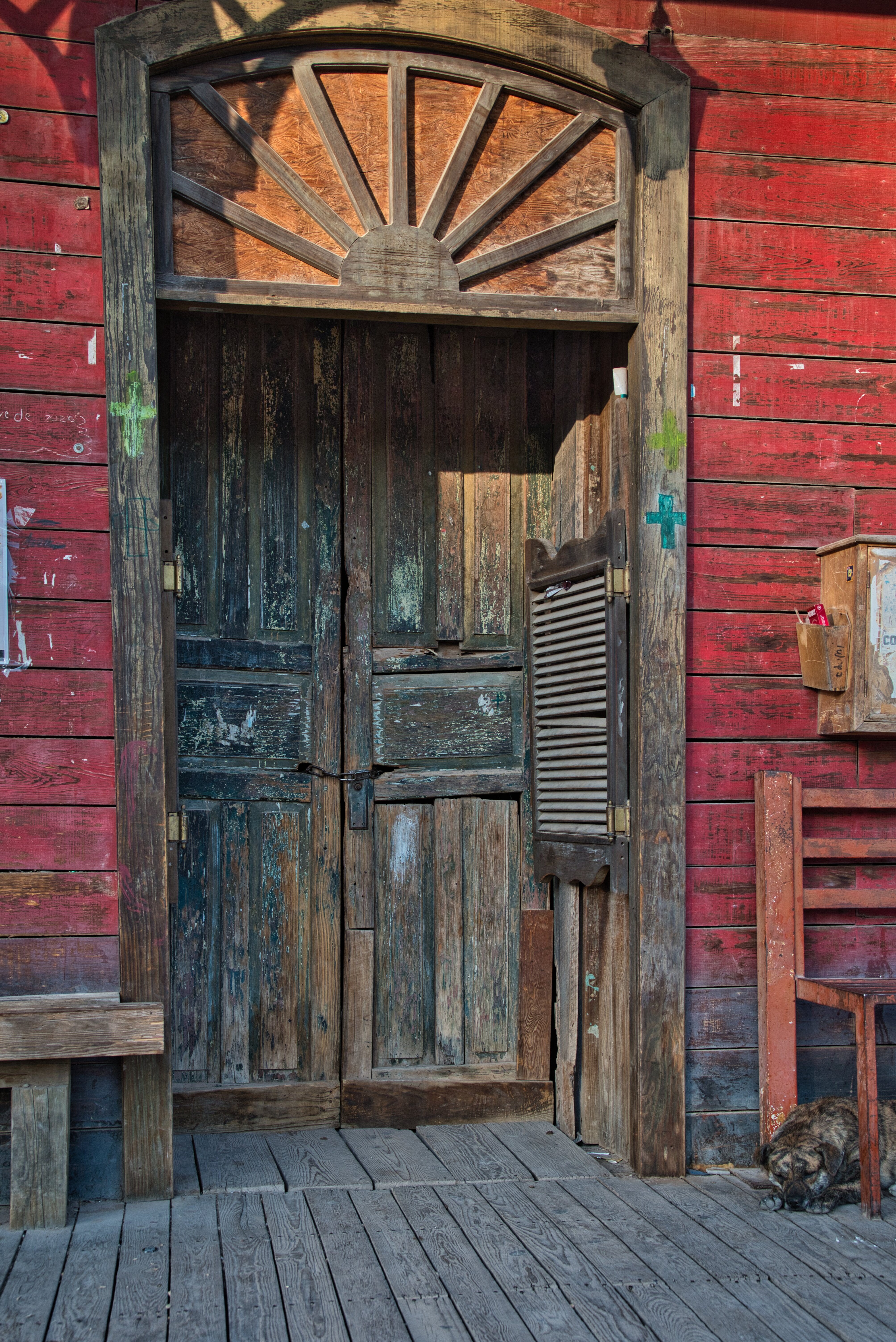
When Westerns faded and big shoots stopped, the government and producers left, but the locals stayed, using the set’s skeleton as their village. Now, real kids walk to a real school past a fake bank and gallows. The old saloon still hosts events. It’s authentic—no tourist shops here.
There is a nearby theme park copying Chupaderos, but the real village didn’t sell out.
As the light hardened, my visit to Chupaderos was complete, and it was time to ride to Pueblo Magico Nombre de Dios. It is one of Durango’s mezcal heartlands: there are vinatas (what they call agave distilleries here) and mezcal is a standard draw for visitors.
Sadly, though (warning: Randy Rant ahead), the Mezcal bottled here has an alcohol content of 35-40%. That’s not the Mezcal I have grown to love. It’s my unequivocal rule that real Mezcal must start at 45% ABV and can reach the legal maximum of 55%. Mezcal Lites with 35-40% ABV that are sold to tourists here lack the depth of the real spirit. If you work at it, you can buy Mezcal a granel (bulk Mezcal), but you need to know who to talk to and bring your own empty Ciel bottle. Let’s call it the informal trade, no labels, no tax, no pretense. Just Pure Mezcal, the way it was meant to be. Not a tourist favorite treat.
Back to Nombre de Dios, the town is arguably the oldest in northern Mexico, founded by Francisco de Ibarra in 1562. It’s presently home to 5,000 inhabitants. It is here that the Ex Hacienda de Juana Guerra is located on the old Camino Real de Tierra Adentro (The Silver Trail) and ipart of the state’s first UNESCO World Heritage Site.
Outside town, Los Salones has massive sabino trees overhanging the Tunal River, their trunks reflected in dark water. I didn’t make it, but you should.
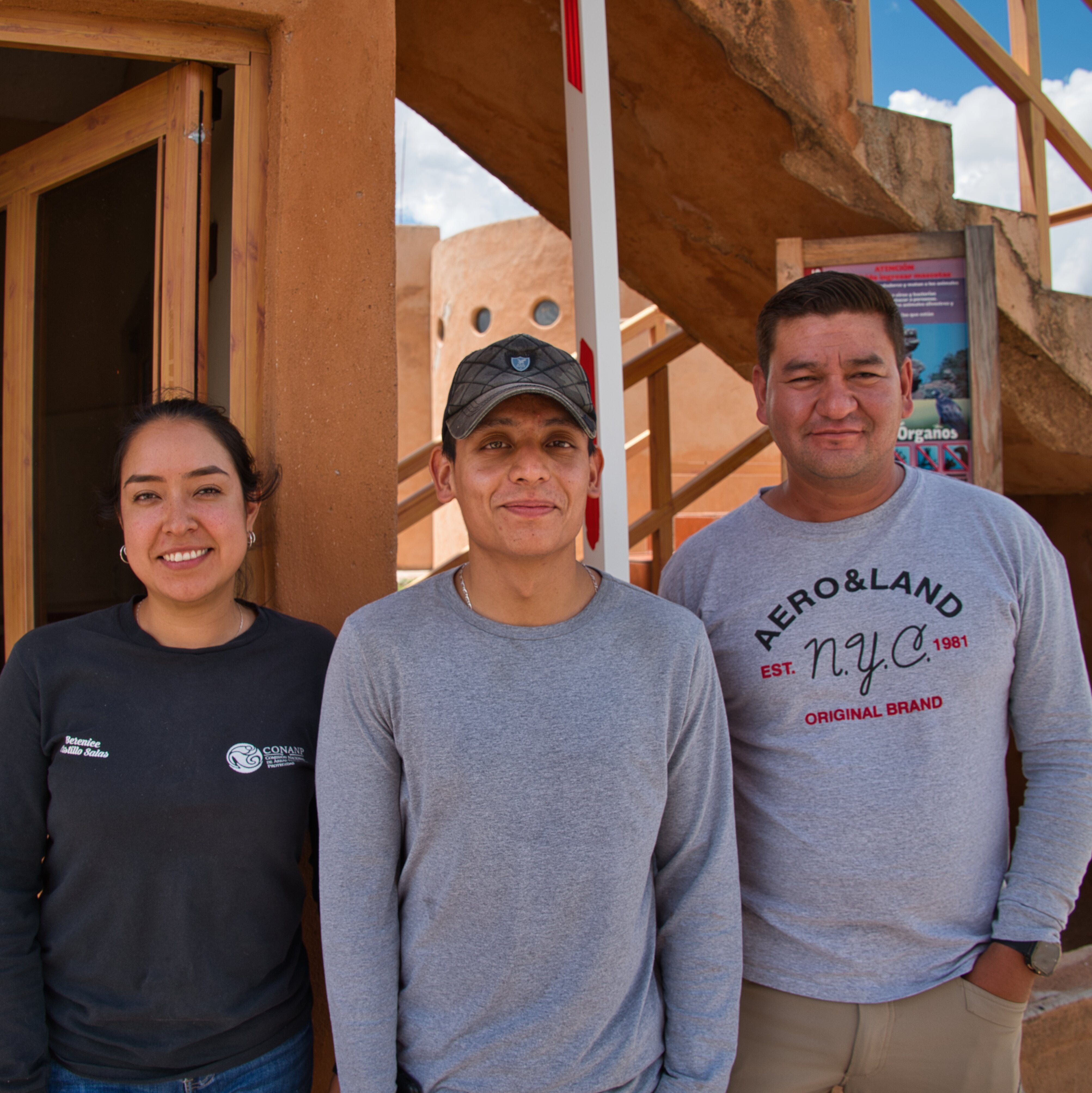
From there, I made a quick stop at Sierra de Organos National Park, home of some spectacular organ pipe-shaped rock formations. I wanted to spend the next night there, stay in a cabin overnight to hike and photograph. I went to the entrance to inquire about how to do this. They open at 8 and close at 8 pm. I wanted to arrive before sunset and then leave the next morning at 7:30. This led to a half-hour discussion among me and three of them. Concluding this protracted discussion, I could come and go whenever the hell I wanted to, never mind any official hours. Glad I took the extra care to figure out this intricate process.
My mind at ease, I rode the last leg of today’s journey to Sombrerete, an old silver‑boom town in northwest Zacatecas that is both a Pueblo Mágico and a UNESCO‑listed stop on the Camino Real. That’s Tomorrow.
NOTE: The most famous movies made in Chupadero:
The Sons of Katie Elder (1965) – John Wayne western; one of the key films that put Chupaderos on the international map as a western location.
The War Wagon (1967) – John Wayne and Kirk Douglas; big studio production that cemented Durango’s “Tierra del cine” reputation.
The Undefeated (1969) – John Wayne and Rock Hudson; post–Civil War western shot extensively on the Chupaderos sets.
Chisum (1970) – John Wayne again, playing rancher John Chisum; one of the best‑remembered Wayne vehicles shot there.
Big Jake (1971) – John Wayne, Richard Boone; kidnapping‑ransom western filmed on the Chupaderos set.
The Wild Bunch (1969) – Sam Peckinpah classic; Durango/Chupaderos were among the principal Mexican locations during the western boom of the 50s–60s.
The Magnificent Seven (1960) – Yul Brynner, Steve McQueen, Charles Bronson, etc.; shot in Durango with Chupaderos as one of the core western-town backdrops.
Gringo Count: I’ve got a string of no-show days going.
Ruins & Nature Tomorrow