

This morning I traveled to Altavista, an archaeological site an hour southwest of Sombrerete, and this evening to Sierra de Órganos National Park to spend the night. No city fluff today.
Around 450 AD, Teotihuacan sent priests, astronomers, and architects into the remote northern wilderness. Their specific mission: find “the place where the sun turns around”, meaning the Tropic of Cancer. The Altavista–Chalchihuites region became the northern frontier of Mesoamerica, a ceremonial outpost at the edge of that world.
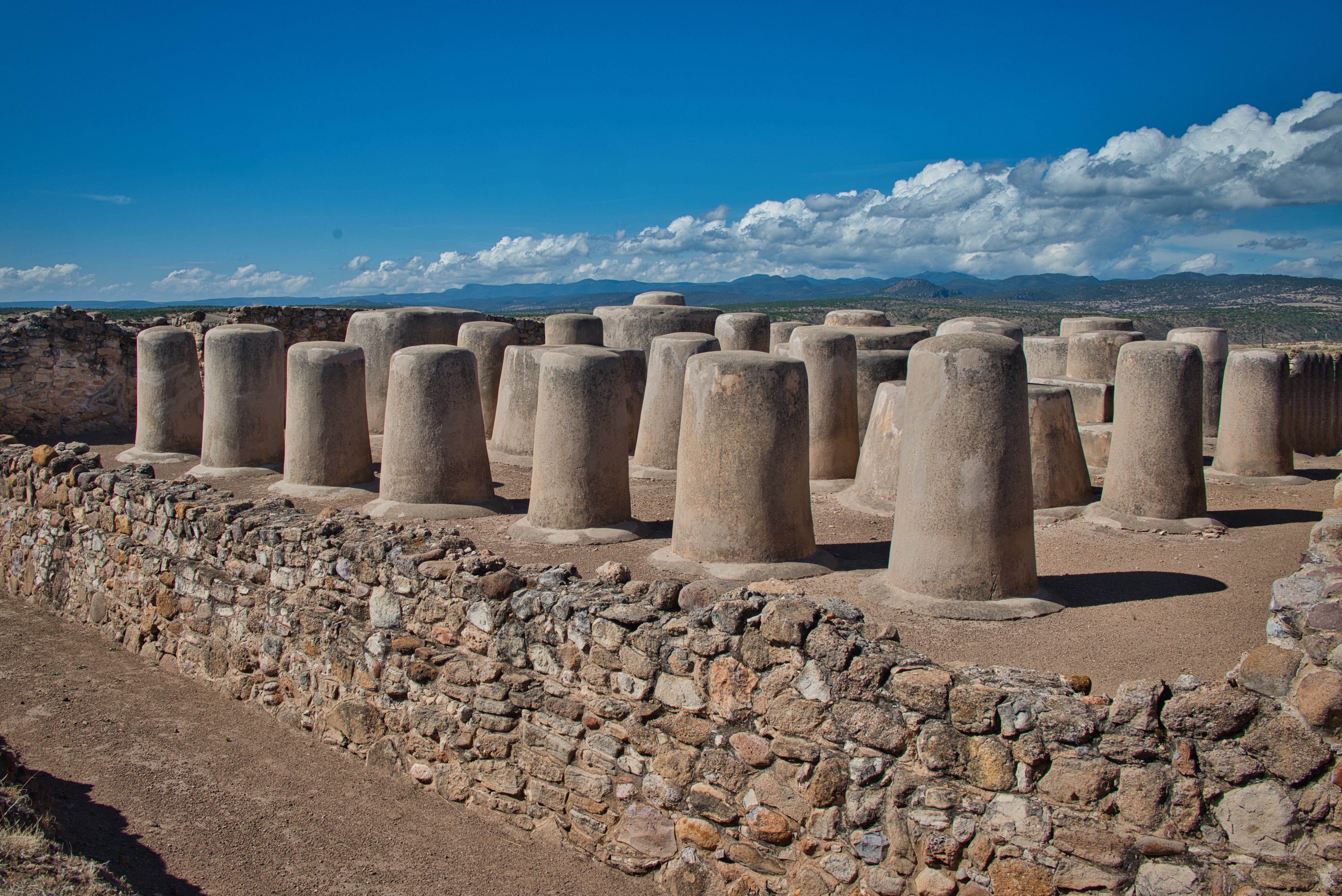
The site’s “Labyrinth” is a working solar calendar. Its corridor and pilasters align with sunrise at the equinox and the sun’s zenith at the summer solstice, lining up with nearby Picacho Hill.
The Hall of Columns (Salón de las Columnas) has exactly 28 columns, set in four parallel rows of seven. Every column is a different size and shape. The number 28 matches the 28-day lunar cycle
Several structures include crypts and high‑status burials with rich offerings.
The Templo de los Cráneos (craniums) displays scattered skulls and skeletal remains on the atrium floor, evidence of human sacrifice.
So, that’s your history lesson on Altavista. Sometimes you just have to cram the facts — otherwise it’s just a very photogenic pile of old rocks.
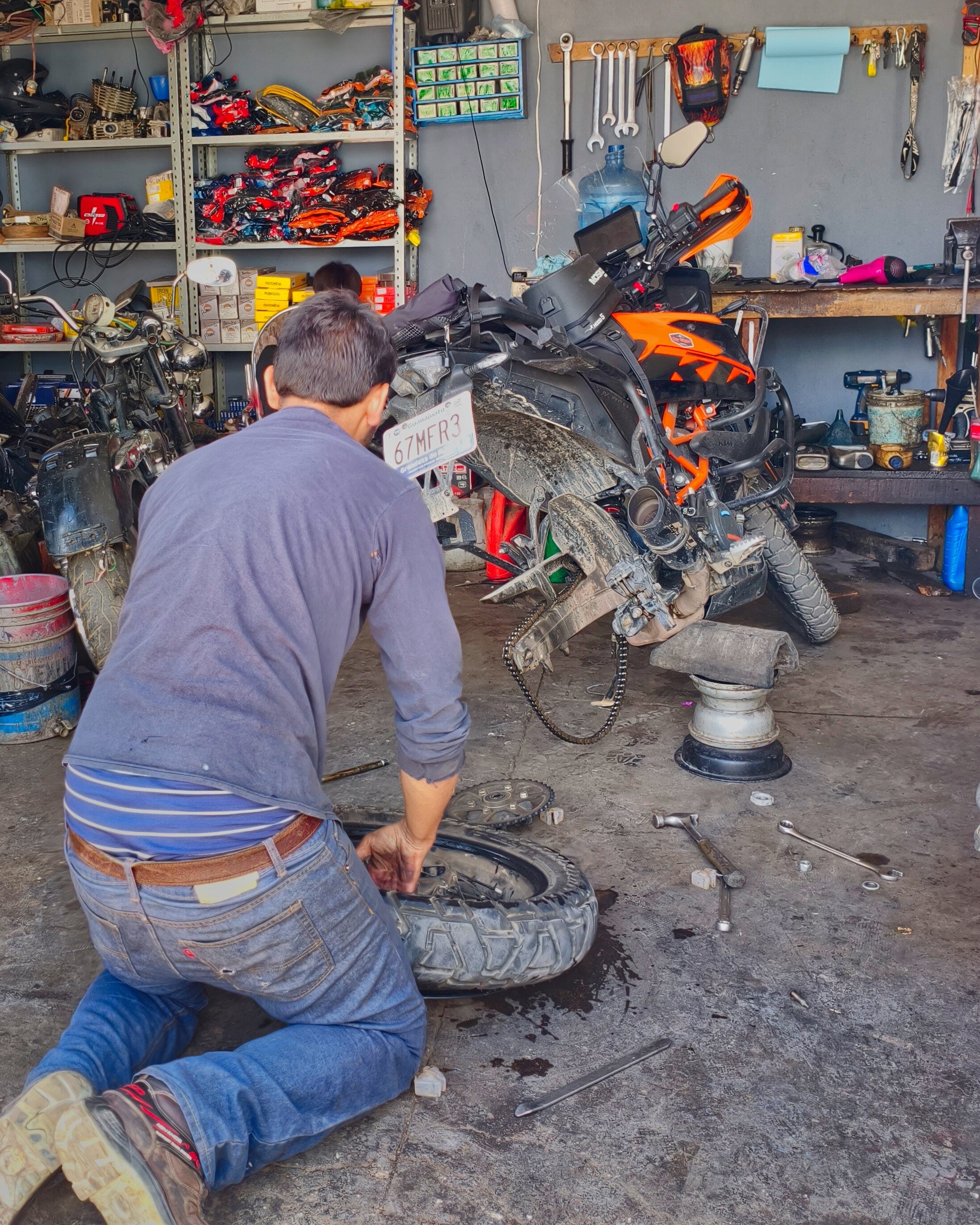
When I left the ruins, I noticed my rear tire was squishy. Too squishy, to the tune of 8 psi. I pumped it up at the Pemex in the nearby village of Chalchihuites and limped back to Sombrerete. I googled a local motorcycle repair shop and rode the bike over to his taller. After my explanation, he dropped his other repair project and dove into the tire repair with great haste.
He found a small nail in the tire. It had punctured the tube. He replaced the tube and went to put the wheel back on the bike. That’s when it all went sideways. He struggled with great might but could not get all of the components to match up. He obviously doesn’t see too many Austrian motorcycles in his shop
.
He had no motorcycle lift, so it was my job to balance the bike on the front wheel and kickstand while he and his young son worked at the rear. My job was to hold the bike up. Not skilled. Not particularly physical. Just… hold the bike up. Minutes dragged on, and we made little progress. After an hour of holding that damned bike up, the clouds parted, a miracle was performed, and the pieces suddenly flew together. A 15-minute job clocked in at two hours. I was thankful that the repair was done and that I was back on the road. He got a raving review on Google Maps.
After the repair, I quickly rode back to my room, assembled a small pack with overnight items and camera gear, wolfed down a quick meal, and headed to Organos 45 with about 45 minutes of daylight left.
I checked in “Mexican Quickly” and rode to my chosen trailhead and hiked briskly to reach the “good stuff” before nightfall.
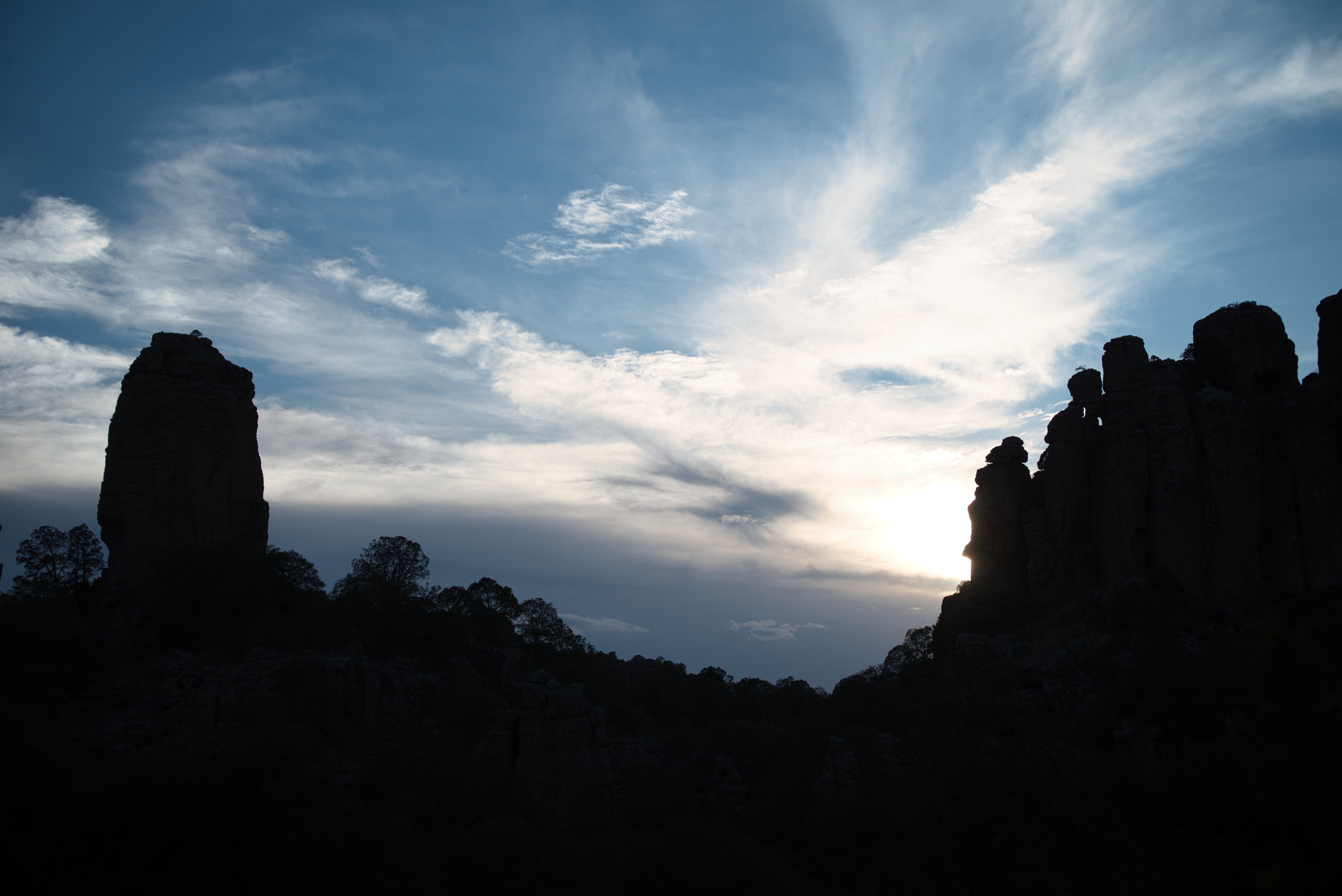
Parque Nacional Sierra de Órganos is small for a national park, so it feels more like a self-contained stone amphitheater than a vast wilderness. The elevation runs roughly 2,120–2,560 meters, so you’re in high-country air, with cooler temps and clear light that makes rocks pop for photography. The name comes from tall columns of rhyolite, which is a type of volcanic rock. These columns resemble the pipes of a cathedral organ or the clustered stems of an organ-pipe cactus. The columns were formed by volcanic activity and then sculpted by wind and water over thousands to millions of years. Individual “tubes” reach 20–60 meters in height, forming a stone “forest” of pillars, towers, and buttresses. Visually, this is one of North America’s best organ-pipe column fields, with some of the tallest and best-formed vertical rock columns found anywhere.
The park became semi-famous as a Western backdrop: John Wayne’s “The War Wagon” was shot here, as were Westerns like “Geronimo,” “The Undefeated,” and films such as “Bandidas” and ”Caveman”. Ringo Starr donned a fur diaper in “Caveman,” filmed here.
My afternoon hike was long, lonesome and sometimes eerie, while walking through the formations. But there was an actual trail, something I never hike on in Mexico. I finished my hike well after darkness fell so I could experience this place by moonlight. As the blue turned charcoal, then black under a quarter moon, it took on a spooky veneer. There was a lot of evidence of wild animals, but I didn’t chance upon any shining eyeballs
.
I returned to the bike and rode back somewhat gingerly on the rough road – not some place or time to fall down. Back to the cabana, I drank some of that cheap Mezcal I don’t like and scribbled my thoughts about my last couple of days.
The next morning, I arose early to do a sunrise hike with the shadows in reverse, before a brisk ride back to Sombrerete.
Sierra de Órganos, and especially staying in a cabin there, was not in my original plans, but the night before I’d read about cabin rentals in this very‑cool‑rock national park, so I said yes.
A lack of vigorous planning can be the adventurer’s best strategy.
Gringo Count: We are still at a total of seven for this trip, all spotted in Durango.
Tomorrow, discovering Sombrerete.