


Sombrerete was founded in 1555 by Juan de Tolosa as Villa de Llerena de San Juan Bautista y Real de Minas de Sombrerete — because apparently one name was not enough. Mexico clearly inherited its talent for absurdly long names from the Spanish.
“The town grew up to guard nearby silver mines and the Camino Real de Tierra Adentro, the main north–south trade route.”
Sombrerete is not a hotbed of tourism. Booking.com has no listings, and Airbnb has two listings, one a guesthouse and the other a home rental, two kilometers from the centro. The guesthouse wasn’t available when I was there, so I got the luxury house. It oozed with character but not much else. I’m not complaining; I have a roof, a hot shower, and a refrigerator. Oh, and a fancy gaming chair.
At its peak, the town had over 30,000 people—more than its current population of around 25,000—and briefly rivaled Zacatecas for silver supremacy. The wealth fueled an architectural boom: ten colonial-era churches, convents, civic buildings, and mansions, all wildly disproportionate to the town’s present size. As the mines declined and the money vanished, no one could afford to tear down or replace the old buildings. What survived is what I’m calling “accidental preservation”.
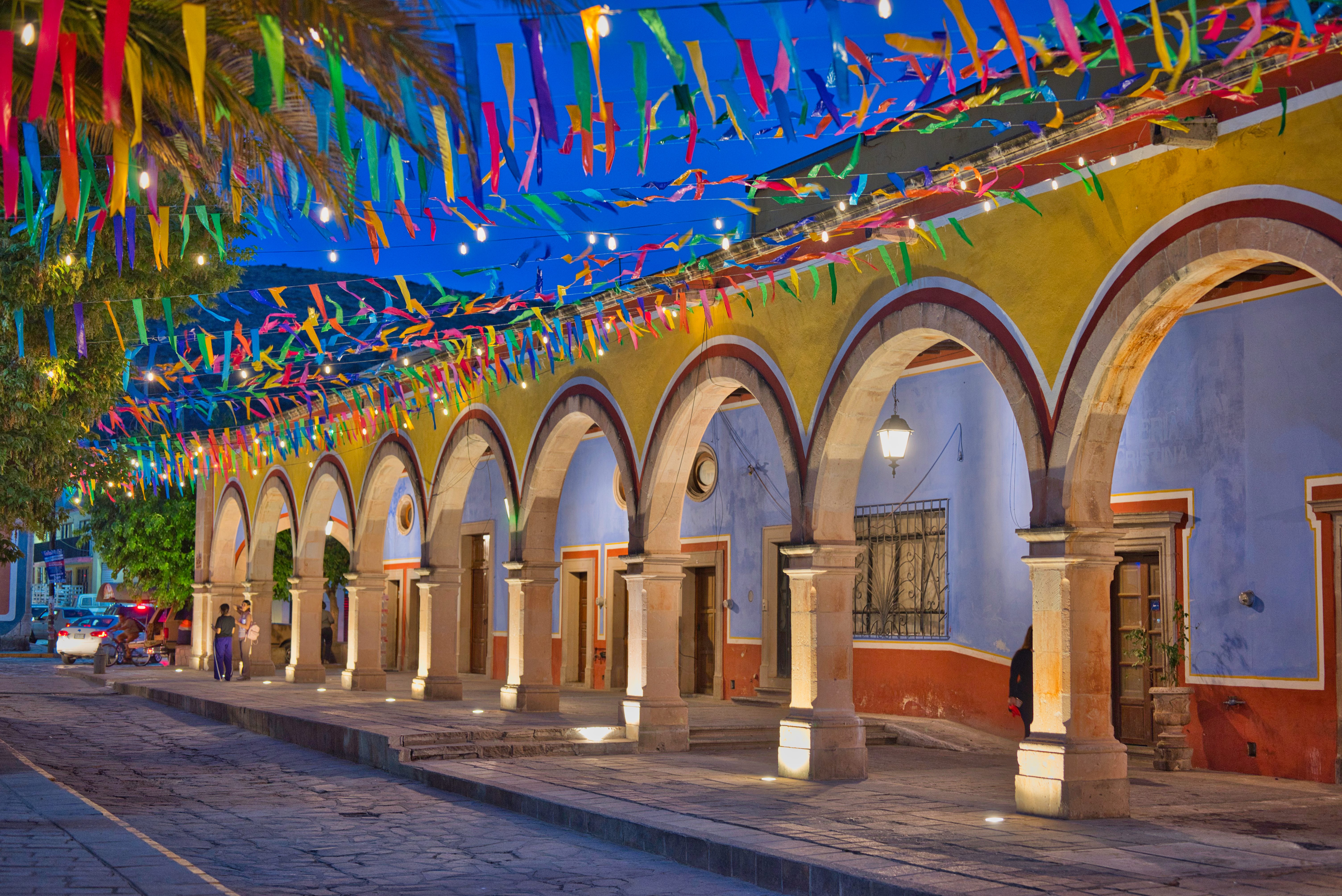
In addition to the ornate buildings, this village has a fetish for arches. And somebody there has a real gift for combining complementary pastel colors. The arches are strikingly beautiful and, to a certain extent, define the town’s vibe
.
In 2010, UNESCO inscribed Sombrerete as part of the Camino Real de Tierra Adentro: a historic trio that includes a living colonial town, the national park of volcanic formations (Parque Nacional Sierra de Órganos, which I visited yesterday), and the nearby ghost town La Noria de San Pantaleón
I didn’t make it here myself; I learned that La Noria once had schools, a cinema, a market, and a baseball stadium. When the mine flooded in the early 1970s, everyone left. Now, what remains includes one of the finest repositories of viceroyalty art in the state — gold-embroidered vestments, Latin manuscripts, a two-century-old pipe organ — all housed within a church in a town that no longer exists.
The surrounding landscape adds to the story of Sombrerete. There are 10 hilltops surrounding the town, each with a cross. Basically, a ring of crucifixes around an old silver camp.
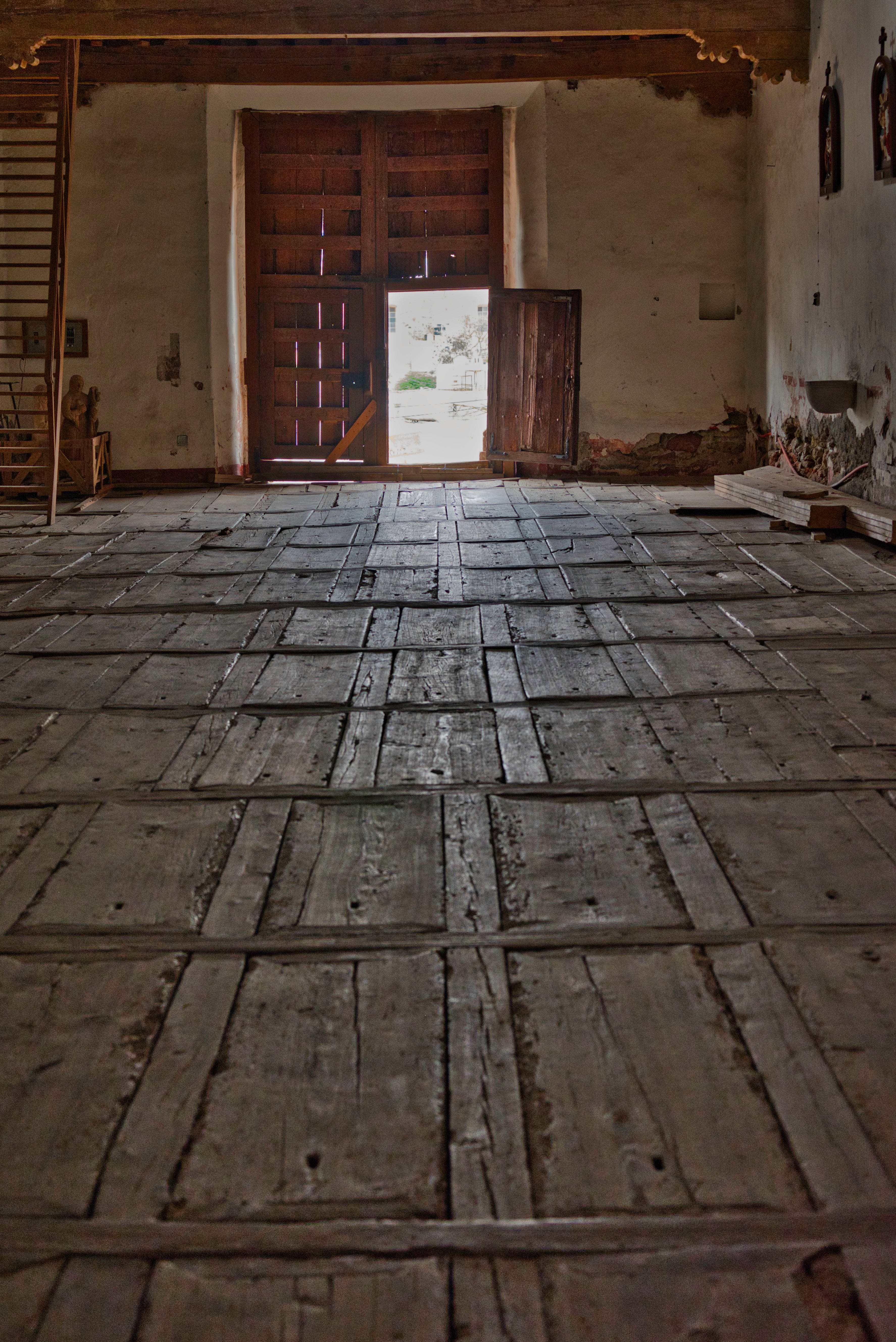
Among the striking churches, one stood out: Capilla de la Santa Veracruz, a 16th-century chapel attached to a convent of Clarisas Capuchinas, a cloistered order of nuns. Inside, no pews line the nave; the floor is a cemetery. 135 crypts lie under numbered wooden slabs covering the entire floor. Until about 1860, Sombrerete had no public cemeteries, so prominent families were buried in churches, with graves closer to the altar seen as premium, literally buying proximity to God. At the far end of this grid of anonymous graves sits a gilded altarpiece covered in 24-karat gold leaf.
For a last bit of weirdness, the town’s food specialty is brujitas (little witches), which are fried masa pockets stuffed with shredded meat or beans, crisp outside and soft insideT. ypical miner’s food dressed up with a sinister nickname.
Gringo Spotting: I’ve been on a dry stretch, none since the big batch in Durango.
Tomorrow, rain and whatever comes with it.