


My last village visit before heading home.
Pinos, with 6,300 inhabitants, is remarkably small to be a Pueblo Magico or a UNESCO site. I’ll explain why it’s an overachiever.
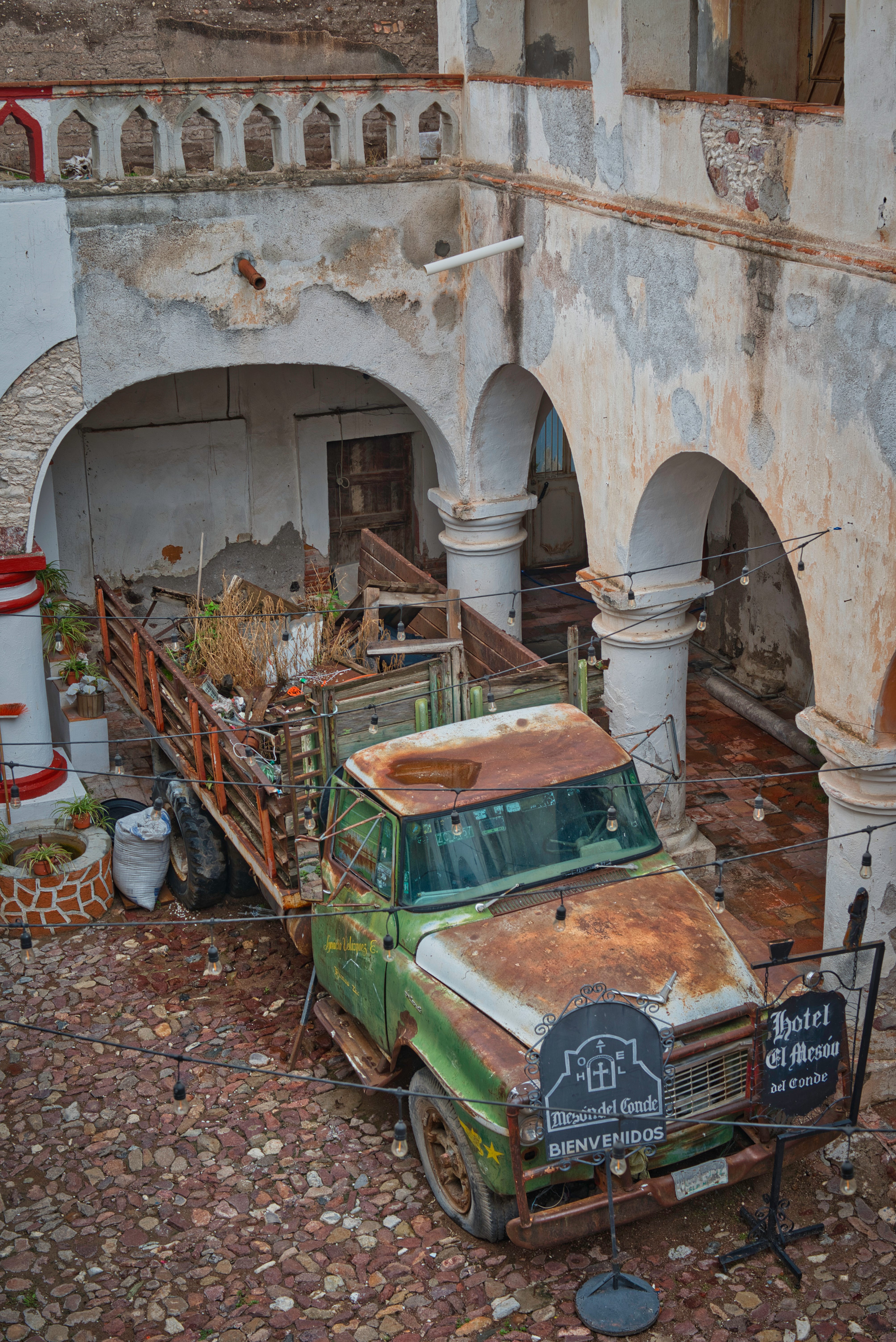
It’s unusual for me to lead with a hotel, but for this visit, it feels right. This hotel captivated me and is the perfect starting point for discovering a destination almost nobody has heard of. Hotel Mesón del Real Conde is a 200-year-old mesón with six rooms priced at 500 pesos ($29 USD). If “mesón” is unfamiliar, it’s an inn with rustic, traditional, historic charm—an accurate label here.
Someone called it a blend of luxury and quirky colonial charm. My first impression was different: as I walked in, I thought I was entering ruins, not a hotel. The patio features restored arched colonnades and hotel rooms on one side, crumbling ruins on the other, deliberately derelict. A dilapidated truck sits in the patio. The hotel pays homage to Pinos’ mining history by incorporating these ruins and artifacts into its structure. It doesn’t feel forced, but rather, authentic. This isn’t a cheesy reproduction; it’s the real thing—just with Wi-Fi
.
It has a terrace with broad views of the valley, rooms for fiestas and meetings, a billiard room, and a subterranean passage once used as a refuge from bandits. The pièce de résistance is the hidden black Christ below. The man with the key to the tunnel wasn’t around.
Now we step into the village itself. Pinos was founded on February 12, 1594, with the full name “Real de Nuestra Señora de la Purísima Concepción de Cuzco y Descubrimiento de Minas de la Sierra de Pinos.” The village’s name comes from local pine trees that once fueled the silver smelters. How do you fit that on an envelope?
This was a critical stop along the 2,600-kilometer Camino Real de Tierra Adentro— aka as the Silver Road—connecting Mexico City to Santa Fe, New Mexico. I discovered that, at its prime, this was the largest land trade route in the world. What the world (and me) doesn’t know about Mexico! Over time, Pinos evolved from a mining camp into a mixed economy of haciendas: Mezcal, agriculture, livestock, and ore-processing estates in the nearby rolling hills. It was evident on the ride in.
Pinos became a Pueblo Mágico in 2012 and is promoted as “el más danzante de los Pueblos Mágicos” for having about 70 traditional dances of three main types: Matlachines, Pluma, and Indios.
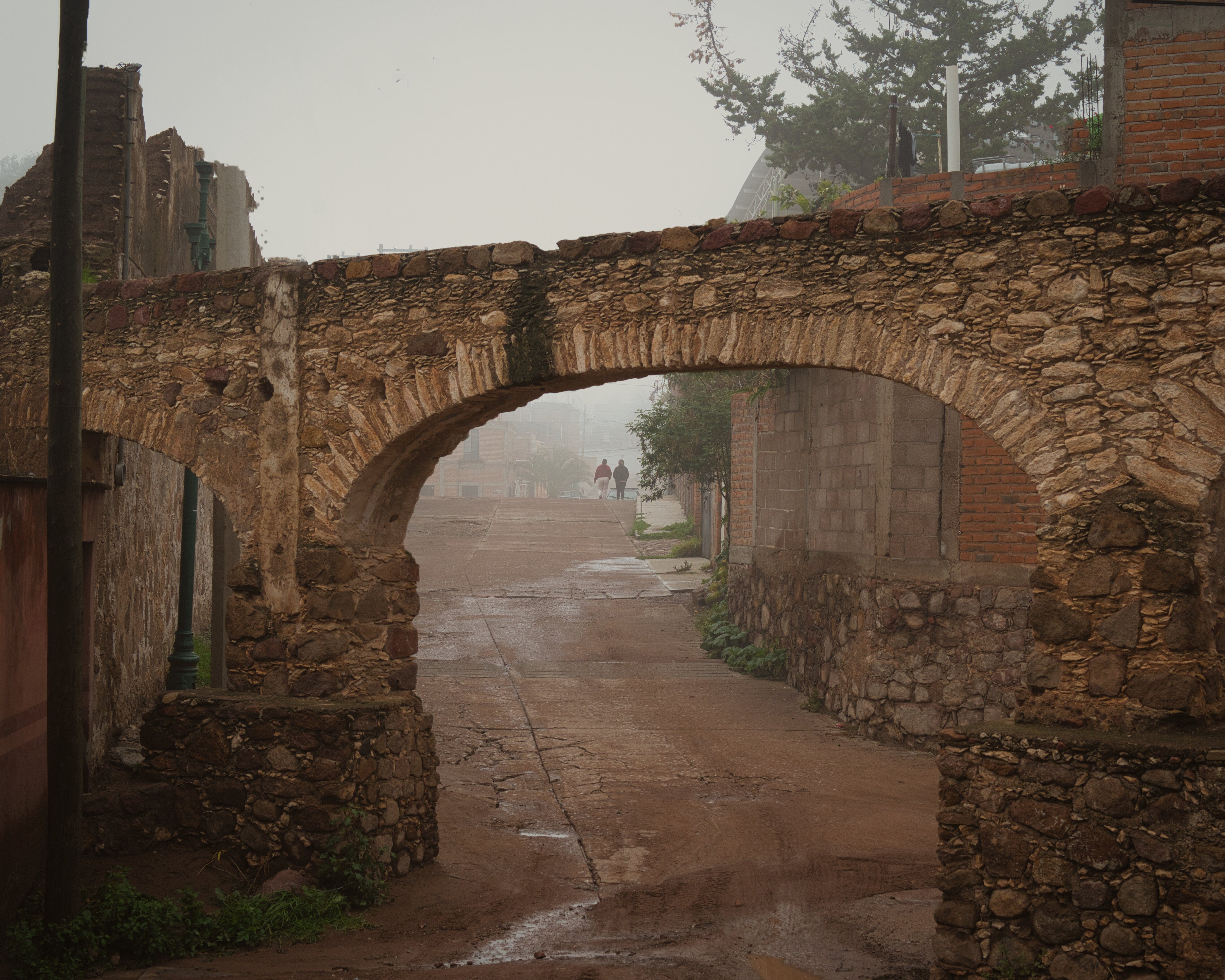
The town’s layout feels jumbled: irregular and crooked streets, hacienda chimneys behind houses, and well-worn plazas. It’s what gives Pinos its great atmosphere. While I was there, it was cloudy, with on-and-off rain. In the mornings, the old village was shrouded in mist, adding to that vibe.
.
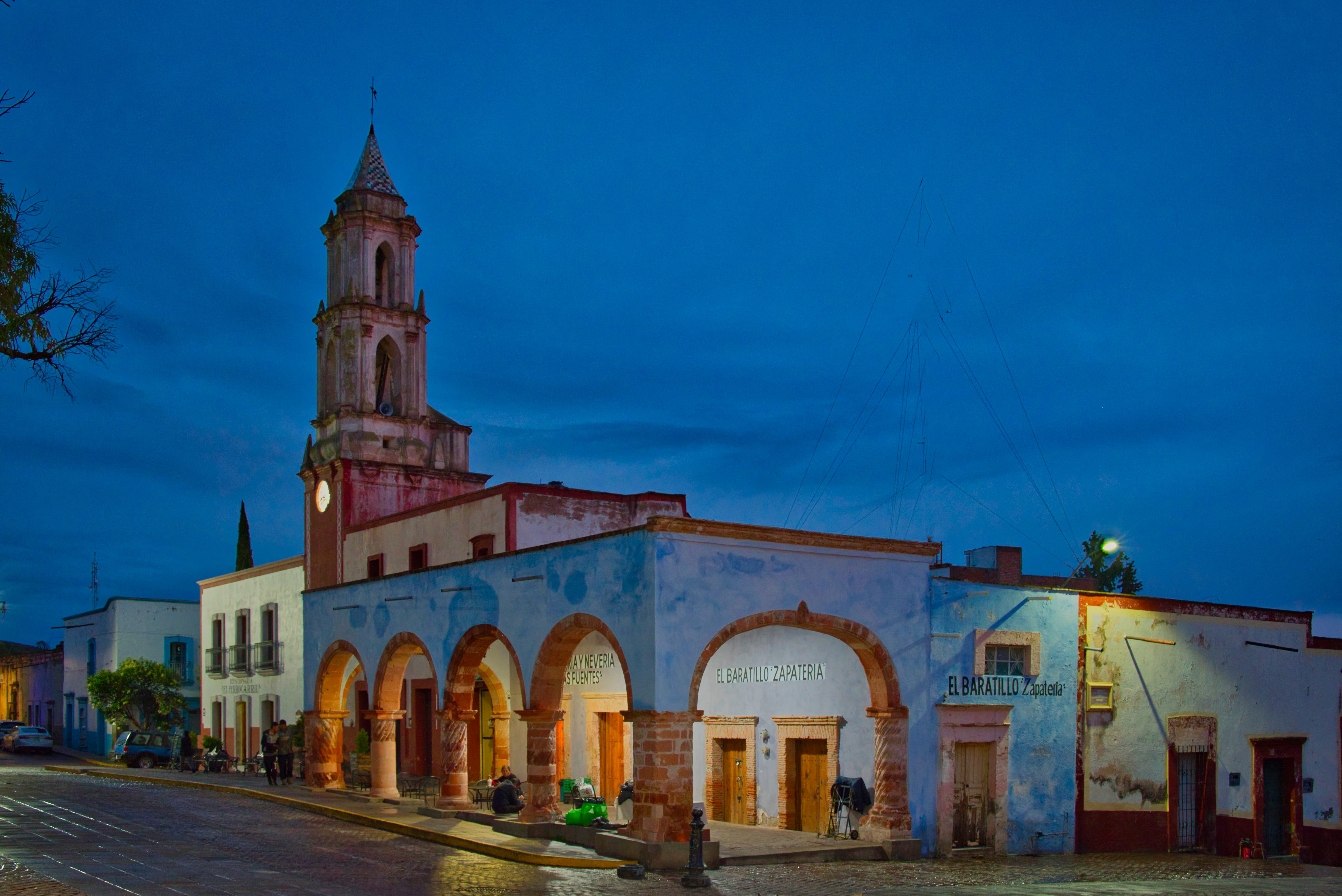
The Church of San Francisco on the Plaza Principal houses a Black Christ of Esquipulas—the same dark-skinned Christ venerated in the small Guatemalan town that is now a major pilgrimage site. Here, he wears a blond wig. Black Christs are a thing here.
This is a town with two restaurants, at least as far as I could discover, unless you include the countless Gordita places. One of the restaurants is a kilometer’s walk from Centro, and its menu consists of shrimp aguachile, potato chips, and cold beer. It felt like a young person’s hangout. The other restaurant in town serves everything, because nobody else serves anything here.
The municipality of Pinos borders Jalisco, Guanajuato, and San Luis Potosí, which is kinda weird, geographically. It is said that cartel members can quickly run to a new state.
I saw giant biznaga cacti over two meters high – huge! Fact Dump: The Pinos semi-desert is home to 112 cactus species, 86 of which are endemic—77% unique to this region. Among them is peyote, central to Wixárika (Huichol) spirituality.
It’s a village lost in time and nearly unknown, even to most Mexicans—and it’s a pleasant three-hour drive through the campo from San Miguel
Tomorrow, Pinos Mezcal