


When it was time to pack and go, the housekeeper appeared in a bright blue dress and a beautiful brown hat, its braided gold rope draped across her chest. I took it to mean she had dressed for my departure—a gesture of respect for our short acquaintance. Or maybe it was all in my head. But the blue dress was certainly real. In three days, we had become something more than strangers. And damnit, I didn’t get our photo.
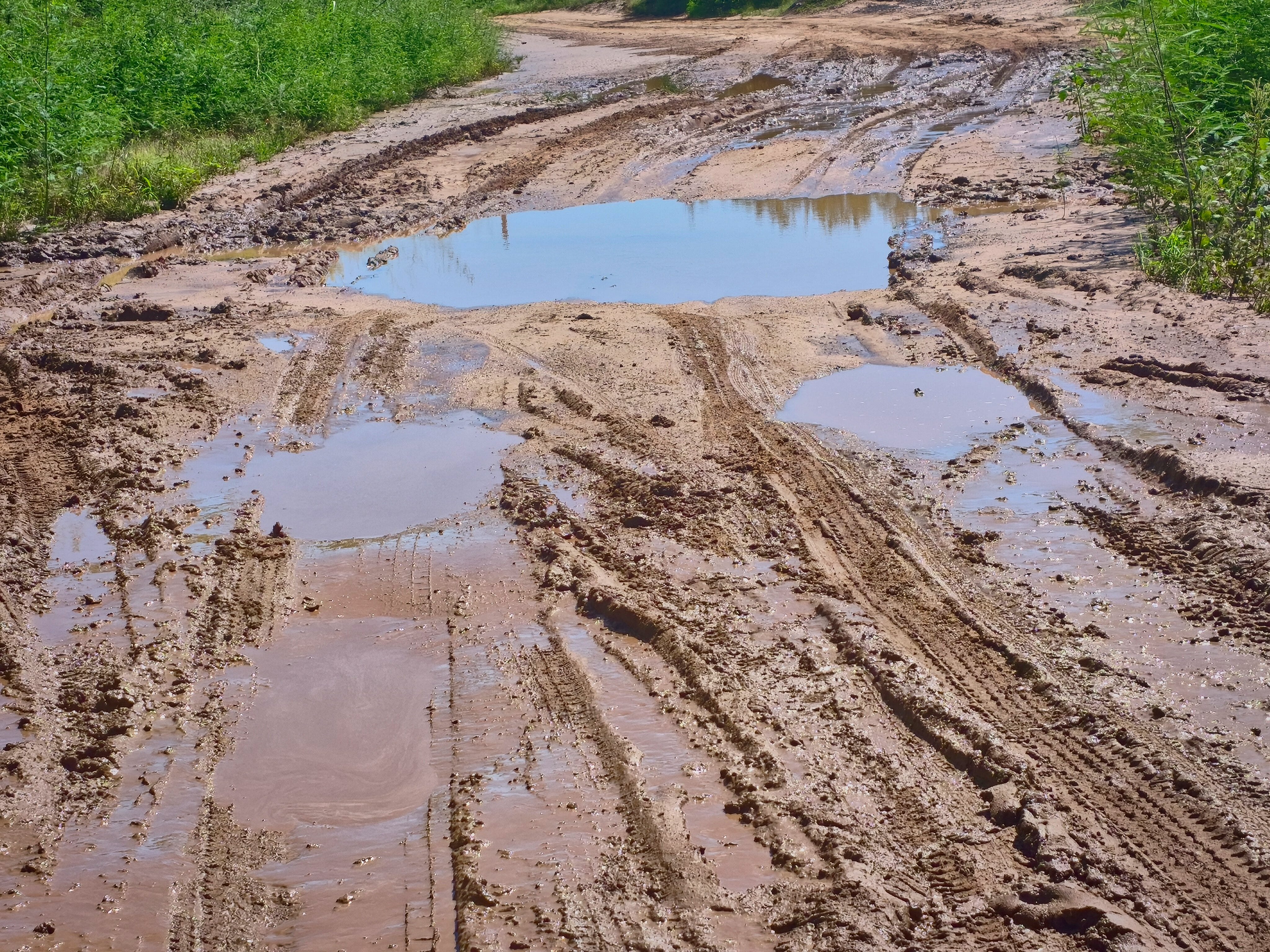
I worked my way along the slick dirt road, once getting off to walk the bike through. Not my most distinguished departure.
I deliberately bypassed Mazatlán. I doubt I would have anything unique to say. Instead, I rode to Escuinapa, a town that borders large mangrove lagoons. The area is famous for its shrimp, mango, and chili.
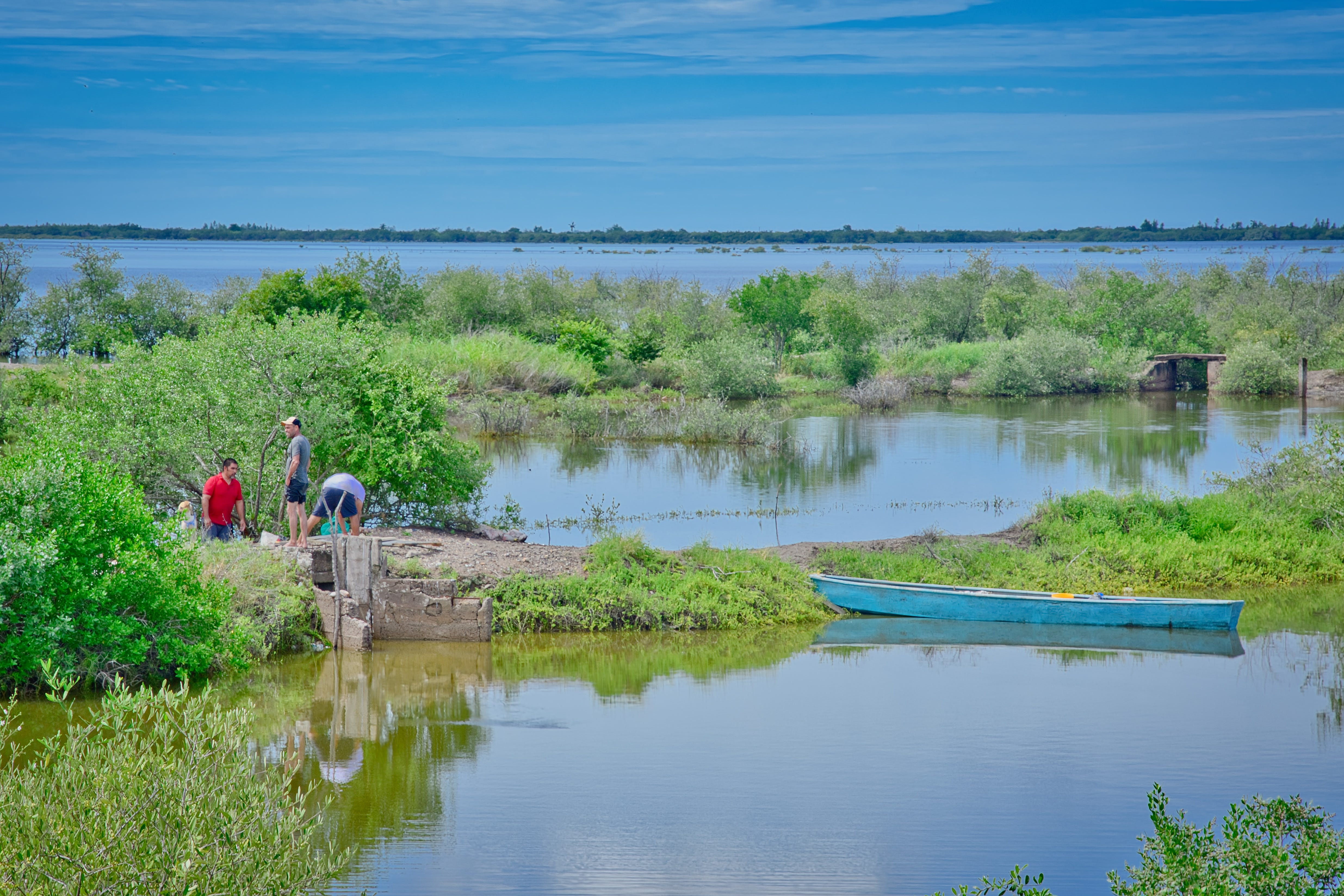
The terrain had shifted, and I was now riding through wetlands, green hills, and tropical vegetation.
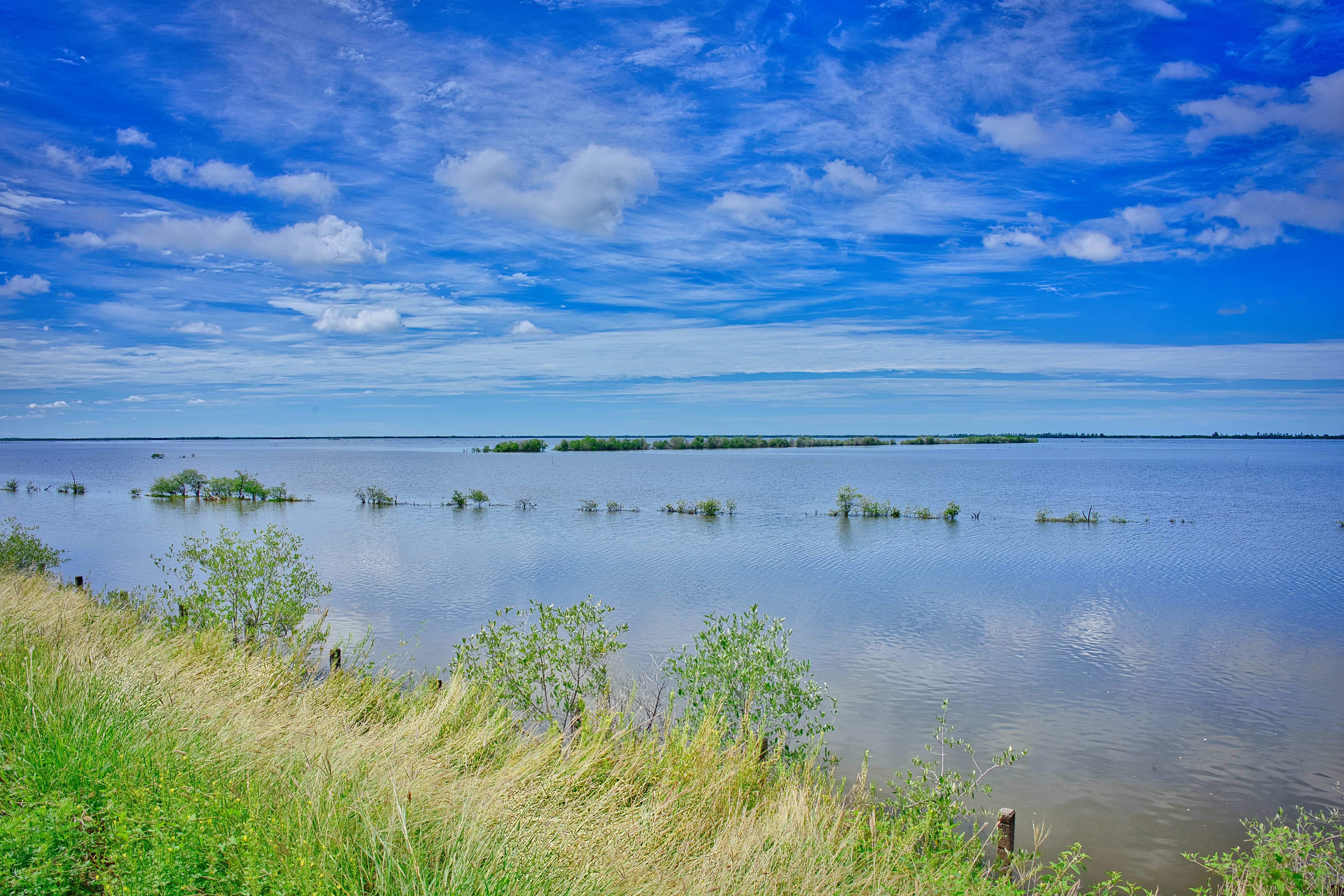
Running low on fuel gave me an excuse to slow down and soak in the surroundings as I reached the southern edge of Sinaloa.
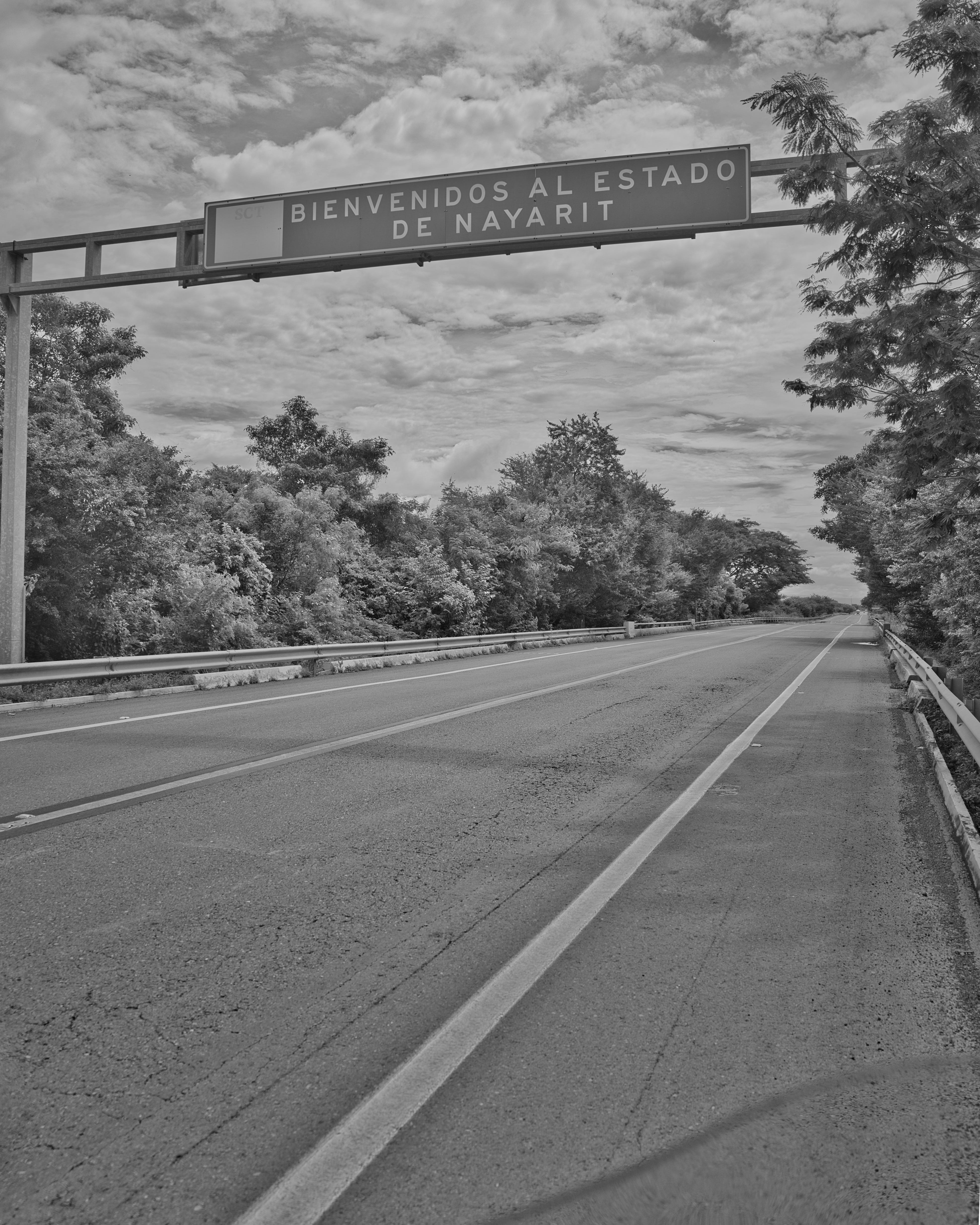
My initial plan was to spend the night in Isla de Mexcaltitán, a village only reachable by panga (small utility boat). In the rainy season, even the streets are only passable by panga. That sounded like something to experience. However, Hurricane Rachel convinced all of the hotels and Airbnbs in town to close.
Instead, I would stay inland at Acaponeta. But first, I had to eat in Santiago Ixcuintla, tobacco country, I learned. I had breakfast at Perla Negra (black pearl). It was also a tire-and-battery shop.
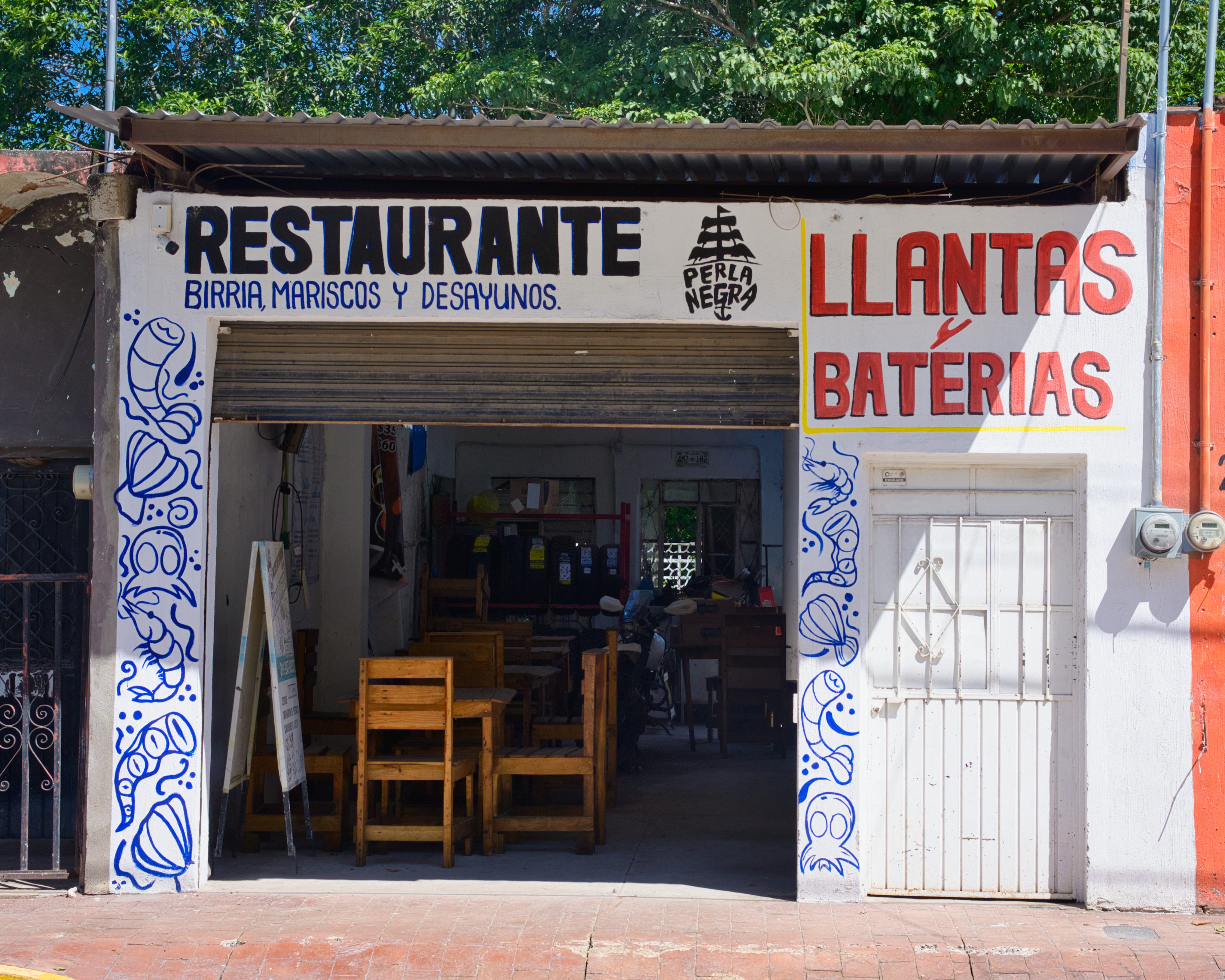
Before departing, I asked the owner for directions to the mosaics. “Find the church, and it will be down a side street.”
It was hot work on foot, and I found nothing but miserable heat.
Once in the square, a man walked up with a small cooler of frozen treats in plastic bags (hielitos). He opened it carefully and worked through the inventory, announcing each flavor and explaining the merits of his favorites.
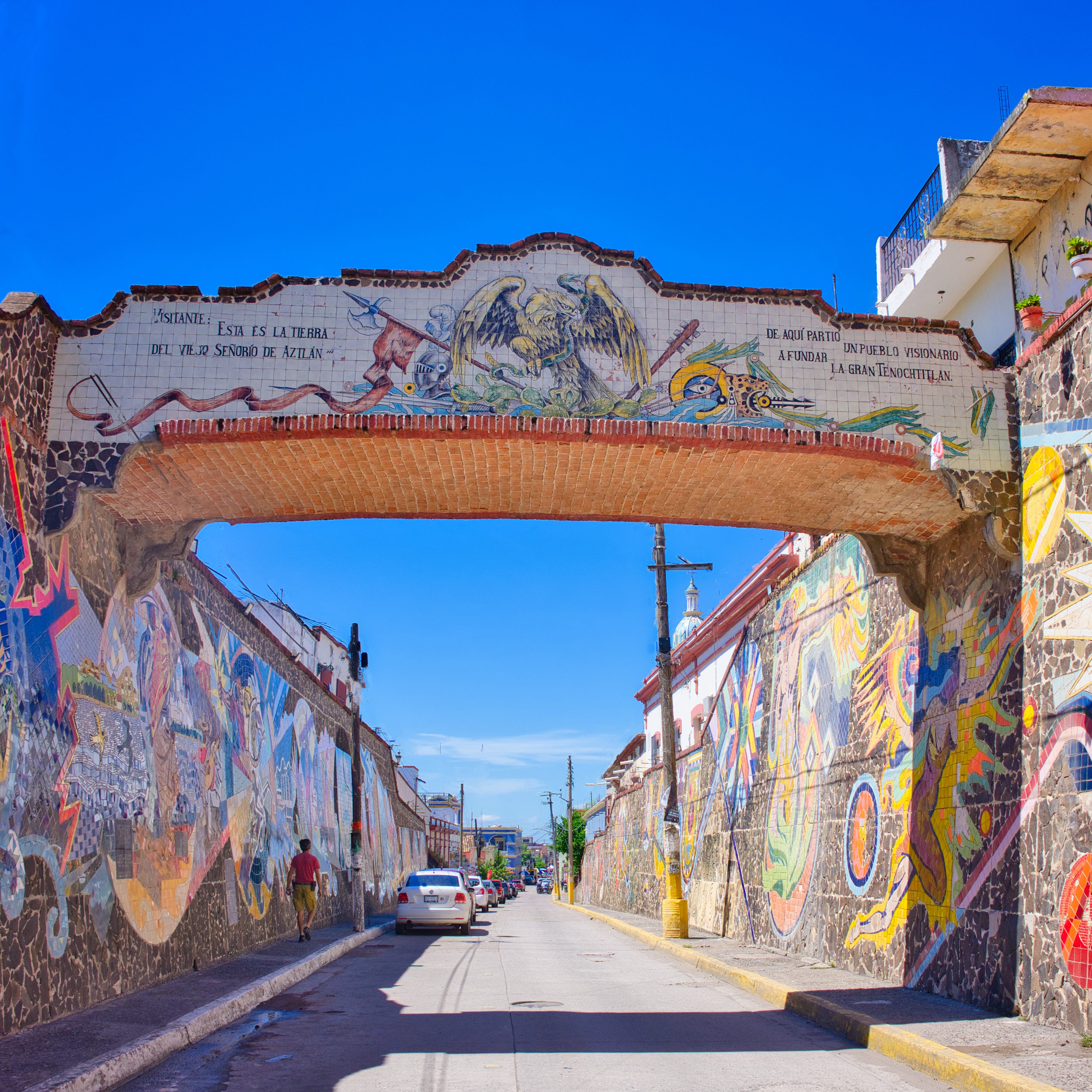
He spotted me as a motorcycle rider, observed that I looked hot, and pointed me toward the mosaic, just around the corner. I chose tuna (prickly pear) and lime: sugary, cold, and tart. He wished me a good journey. Sale complete.
And I found the mosaic
On the final leg to Acaponeta, I was running on empty and pulled into the first gas station I saw. A guy stood next to his well-worn bicycle, looking over his scuffed arm. He had a full set of bags, so he was a long-distance rider.
Being kindred two-wheeled spirits, we quickly struck up a conversation, and I wanted to know about his injury. A woman in a car had just taken him out, and he was now cleaning the wound. He didn’t seem overly concerned about his road rash. Clean out the gravel and move on, let the body heal itself, no fuss.
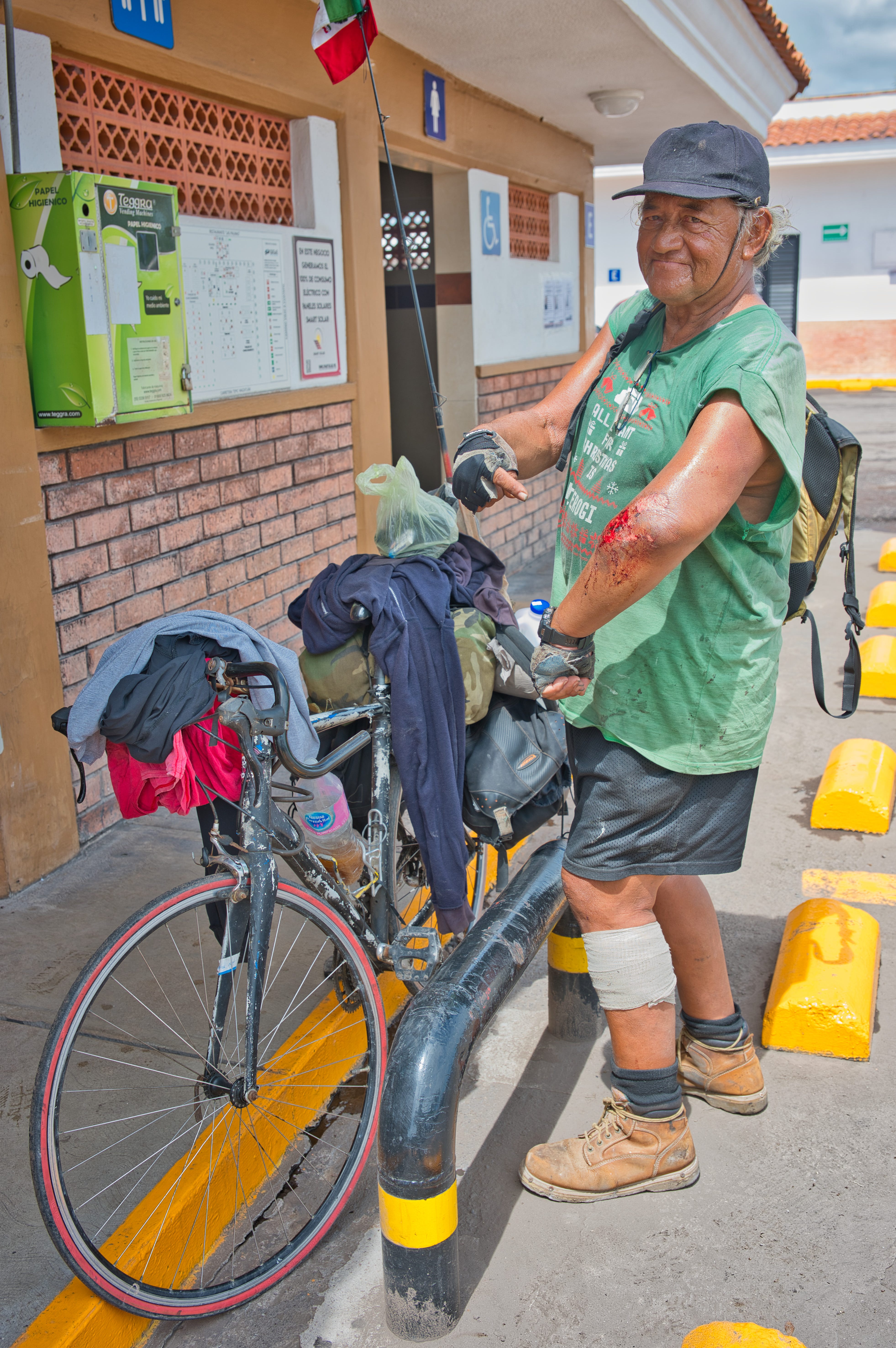
He started by riding north to La Paz, ferried across the Sea of Cortez to Mazatlán, and was now riding south. “I’ve been riding for three months, and I don’t know how much longer I’ll ride or where I’m riding to.”
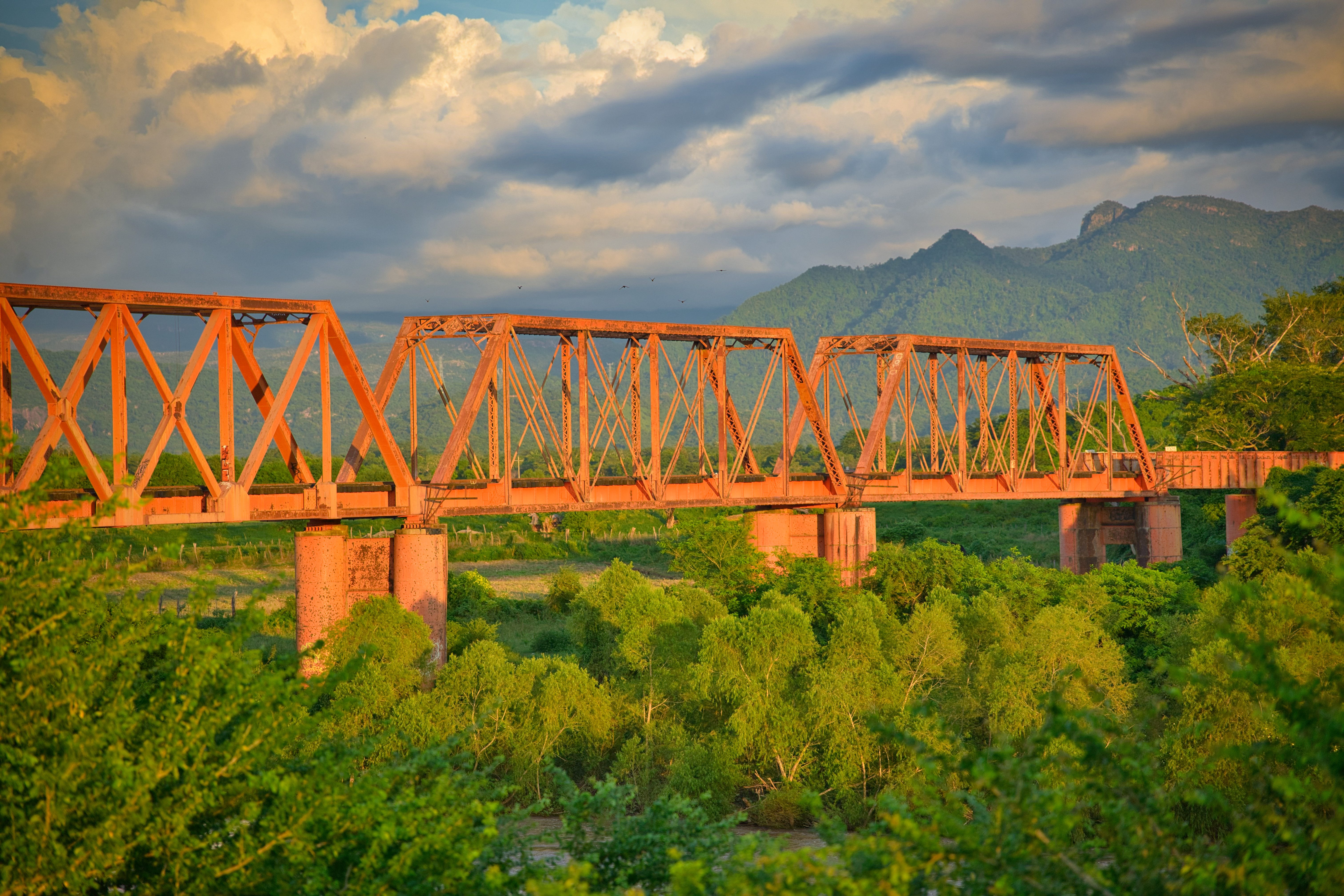
Acaponeta was my stop for the night: set on the Río Acaponeta, with a lively centro, superb Camarones Campechana Grande at El Tiburón, and a nice stay at Yalitza’s Airbnb.
She told me I was their first-ever guest. Everything was new, with the TVs and appliances still covered with the thin protective film they ship with.

She and her husband had even lined up the utensils in a row on the countertop. And I could park the bike in their gated, covered driveway. The young couple was nervous as hell, this being their first rental. I wrote a glowing review.
The night’s service was just finishing when I stepped inside the church. The interior was pastels in yellow, blue, and teal.
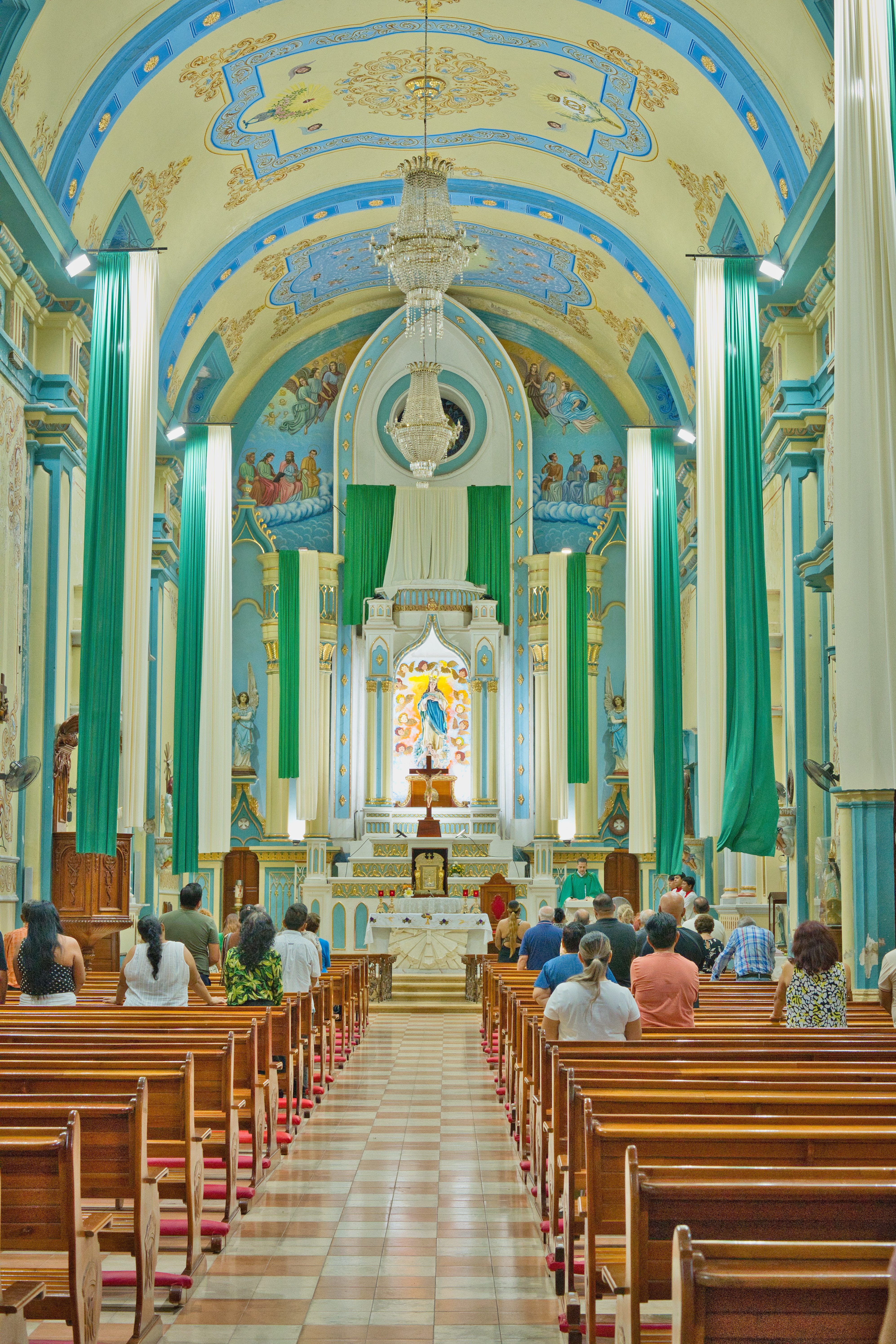
Acaponeta is called the “City of Gardenias.” I did not see a single gardenia.
Cumulative distance ridden: 3,423 kilometers
Leg two of my five-leg journey is now complete. I’ve traveled through Nuevo León, Coahuila, Chihuahua, Sonora, and Sinaloa.
Now I just need to get home.
More Photos
Day 18 Celestino Gazca Villaseñor

Yesterday’s article was so jam-packed I couldn’t fit everything without creating a photo salad. So, a peek from the ride into Celestino.