

Saturday morning, I left Zacatecas on my bike, heading southwest to the ruins of La Quemada under sullen, thick clouds.
Nobody knows who built this place. Maybe it was a Teotihuacan enclave, a Toltec emporium, or an independent northern capital.
There’s a wild story with some historians associating it with the mythical Chicomostoc — the Seven Caves — where the Aztecs supposedly camped out for nine years during their migration to the Valley of Anahuac. It’s probably more legend than fact, but as origin myths go, it’s a keeper.
At its peak, La Quemada linked roughly 220 settlements by roads, moving taxes, resources, and people for ritual duty.
Its Hall of Columns predates the palace at Tula, which in turn inspired Chichén Itzá’s Temple of the Warriors. So this overlooked Zacatecas site may have sparked an idea that spread across Mesoamerica.
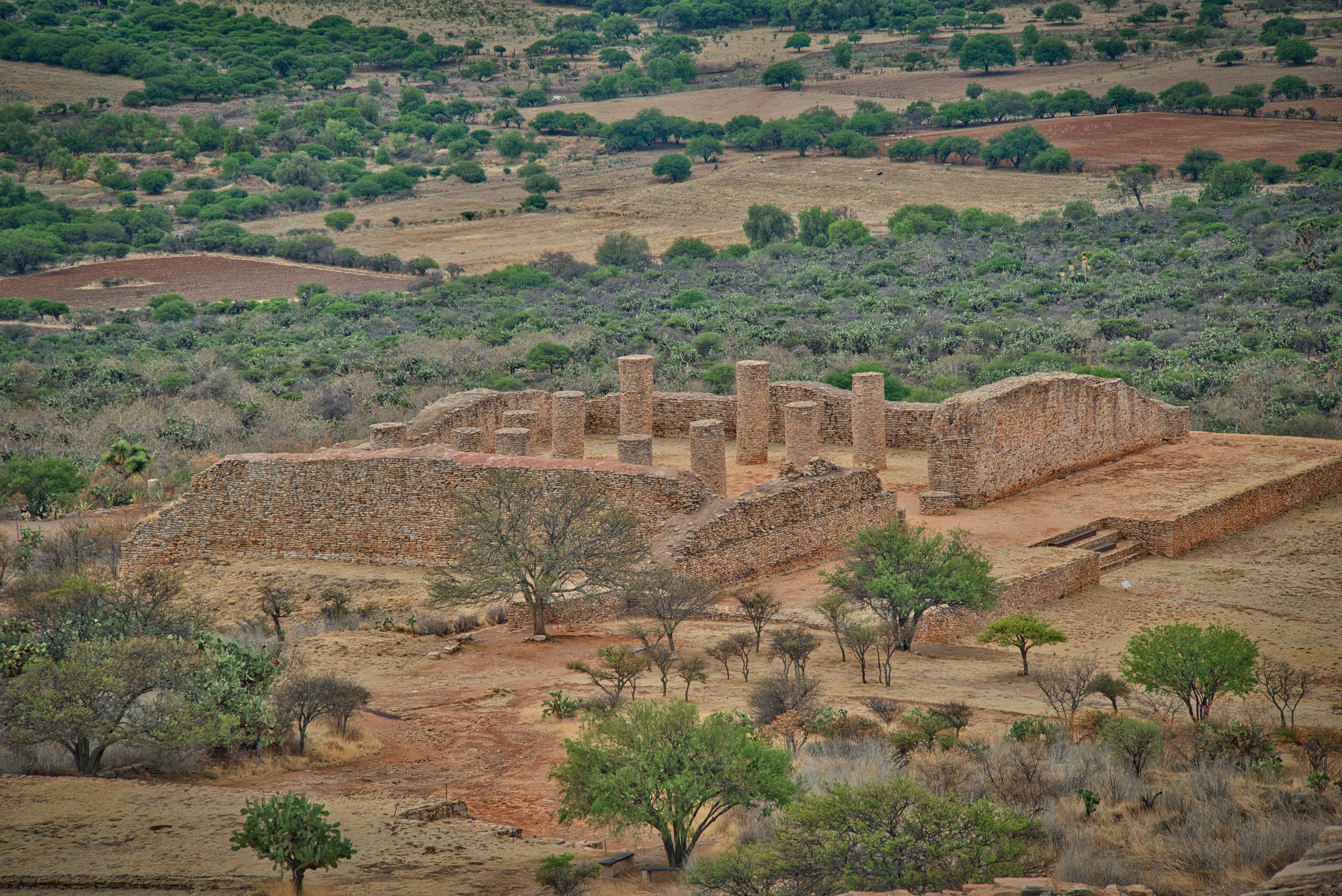
The whole site was deliberately torched when it was abandoned. Whether that was a ritual self-destruction by locals or payback from enemies is still up for debate.
I sat long on the defensive wall they built and imagined what it was like back then. At 900 meters long and nearly 4 meters high, the wall suggests they were worried about something — but who knows what. They had a helluva 360-degree view from that hilltop. I had it all to myself; I was the only visitor. This place is a real mystery and one of the more interesting Mexican ruins I’ve walked. If your idea of ruins is ‘nice pyramid,’ La Quemada surprises.
After my self-guided tour, I took a short ride to Villanueva — a new Pueblo Mágico just 20 minutes away. I must say I didn’t see much magic. My guess is the ‘magic’ is basically La Quemada, with Villanueva just the closest village wearing the tourist‑attracting badge.”
Then I moved on to Jerez. I’d heard something unique happens here every Saturday night, and I wanted to see—and hear—it for myself. I rearranged my schedule to make it happen. Another reason to go was that Mary and I had an apartment near Jerez, Spain, and I just had to go to Jerez, Mexico.
The town’s default setting seems to be street culture powered by live bands — several groups playing at once around the Jardín Principal, their music bleeding into each other. On this rainy night, the groups played inside the bars, playing to the street. The patrons moved from bar to bar, chasing each new scene and shot of tequila. This was no sit-and-listen scene.
The music they play is called Tamborazo, centered around brass and drum. It evolved from 19th-century military bands. The early groups were small — clarinet, trumpet, snare, bass drum — so raucous they were nicknamed alboroqueros. Later, saxophones, trombones, and tuba were added to create the Tamborazo you hear today.
The Marcha de Zacatecas, often played in tamborazo arrangement, is routinely called Mexico’s second national anthem.
It was the same genre of music I heard the night before in Zacatecas at the Callejoneada, so it wasn’t altogether new. Still, it was a special night of rubbing elbows (“literally”, that over-used and mostly incorrectly-used word) with the locals, sharing shots and tequila bottles, and taking bar-scene photos. I surrendered around midnight, but the music continued across the street until 4:30 in the morning.
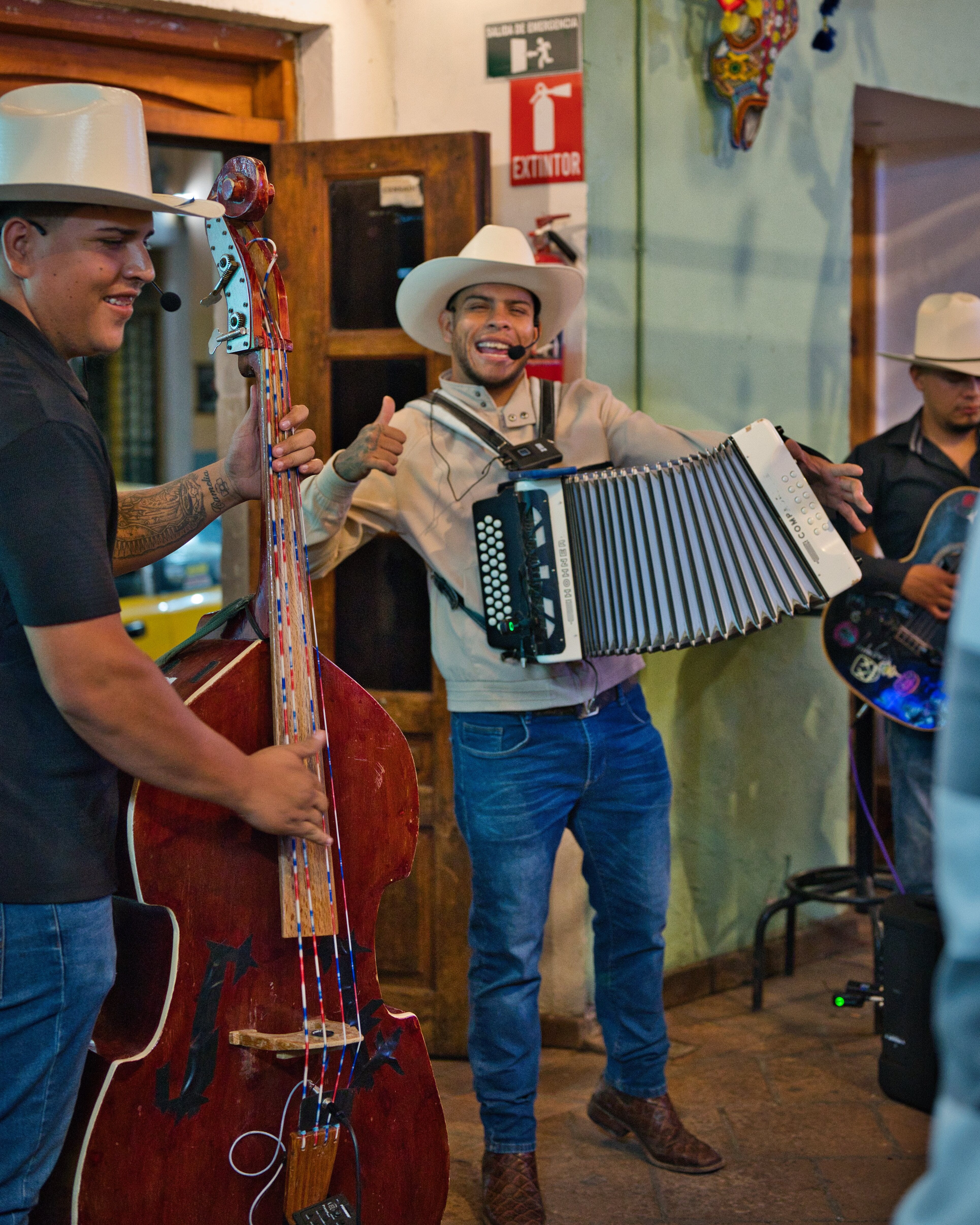
People told me the rain kept the crowd smaller and quieter, but even by my standards, it was a wild night.
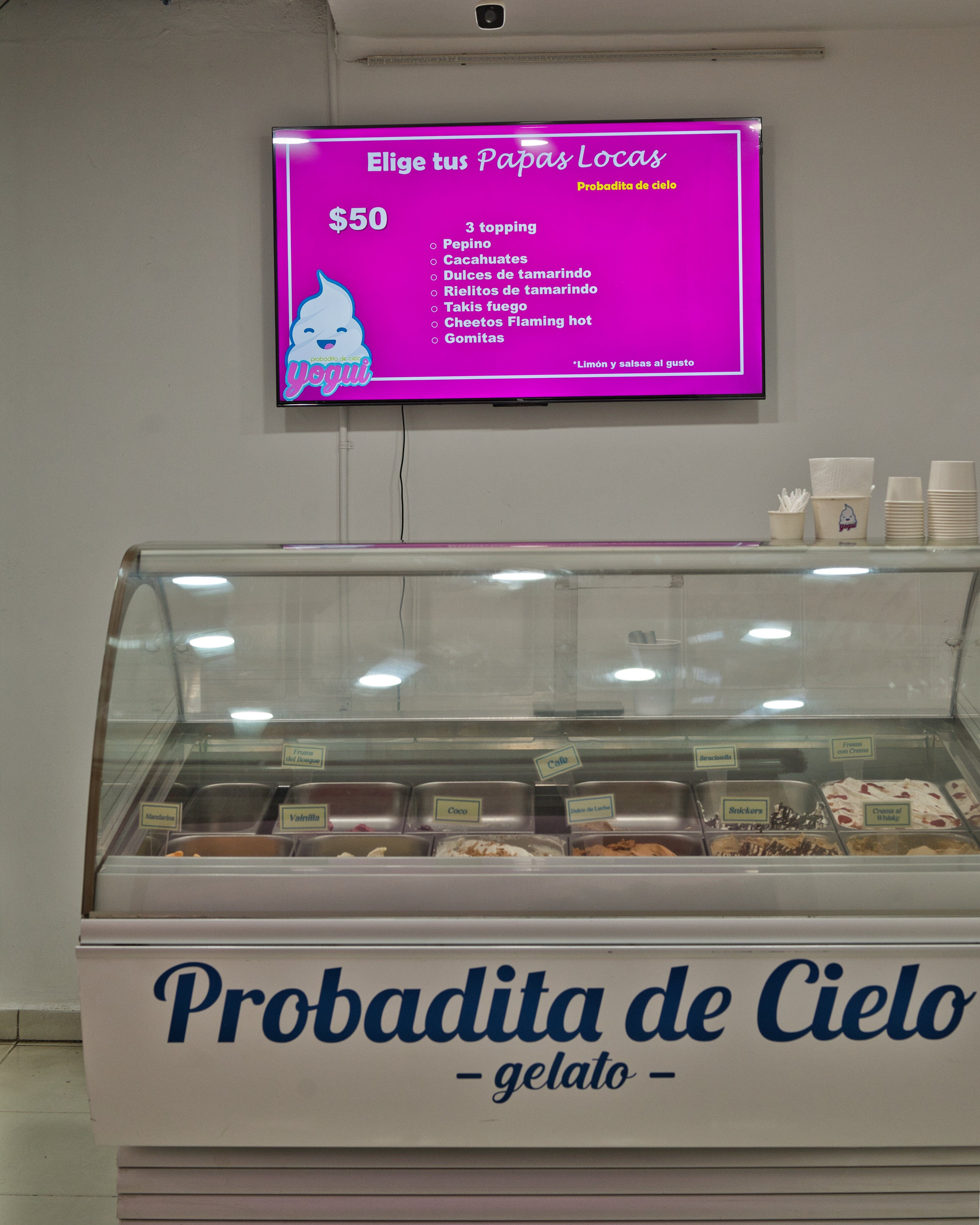
If you wanted to take a break from tequila and lick down some late-night ice cream, there was a gelato shop below my hotel room still open at midnight, advertising Cheetos Flaming Hot and Takis Fuego flavors.
Although I have abandoned my daily expense report, I must brag that the hotel room in Jerez cost me a whopping 400 pesos, around $24 USD.
On the Gringo Search front, I did talk to a guy there who had worked in the U.S. and said he knew some Gringos, but there weren’t any in the town of 40,000 people.
Tomorrow I ride to Fresnillo. Damn the cartels.