

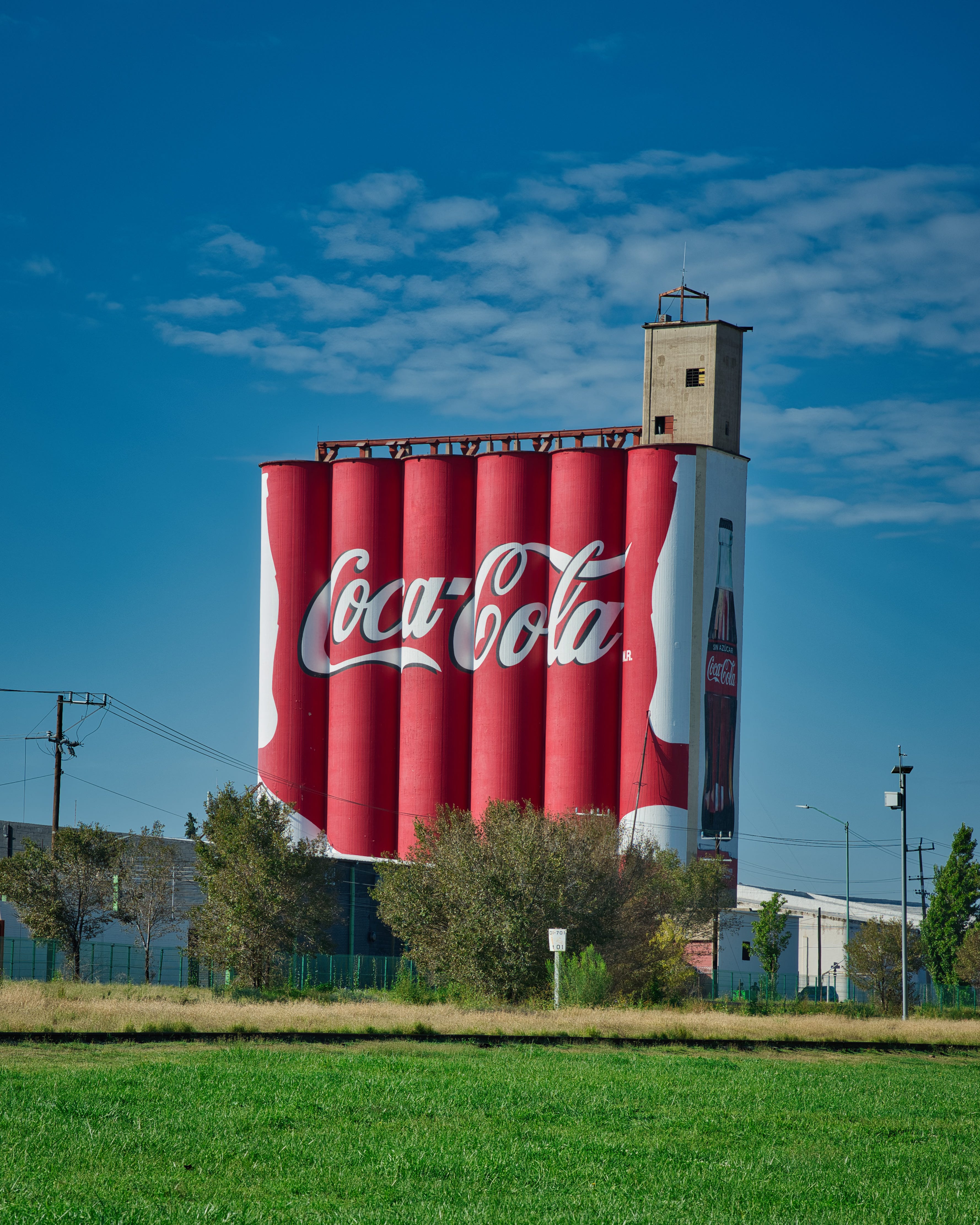
Leaving Cuauhtémoc, I saw a huge grain elevator badged with the brightest-red Coca-Cola logo. Grain elevators weren’t really designed to be seen; their form strictly followed function. Gray is their natural color except when Coca-Cola writes a check and throws in a free paint job.
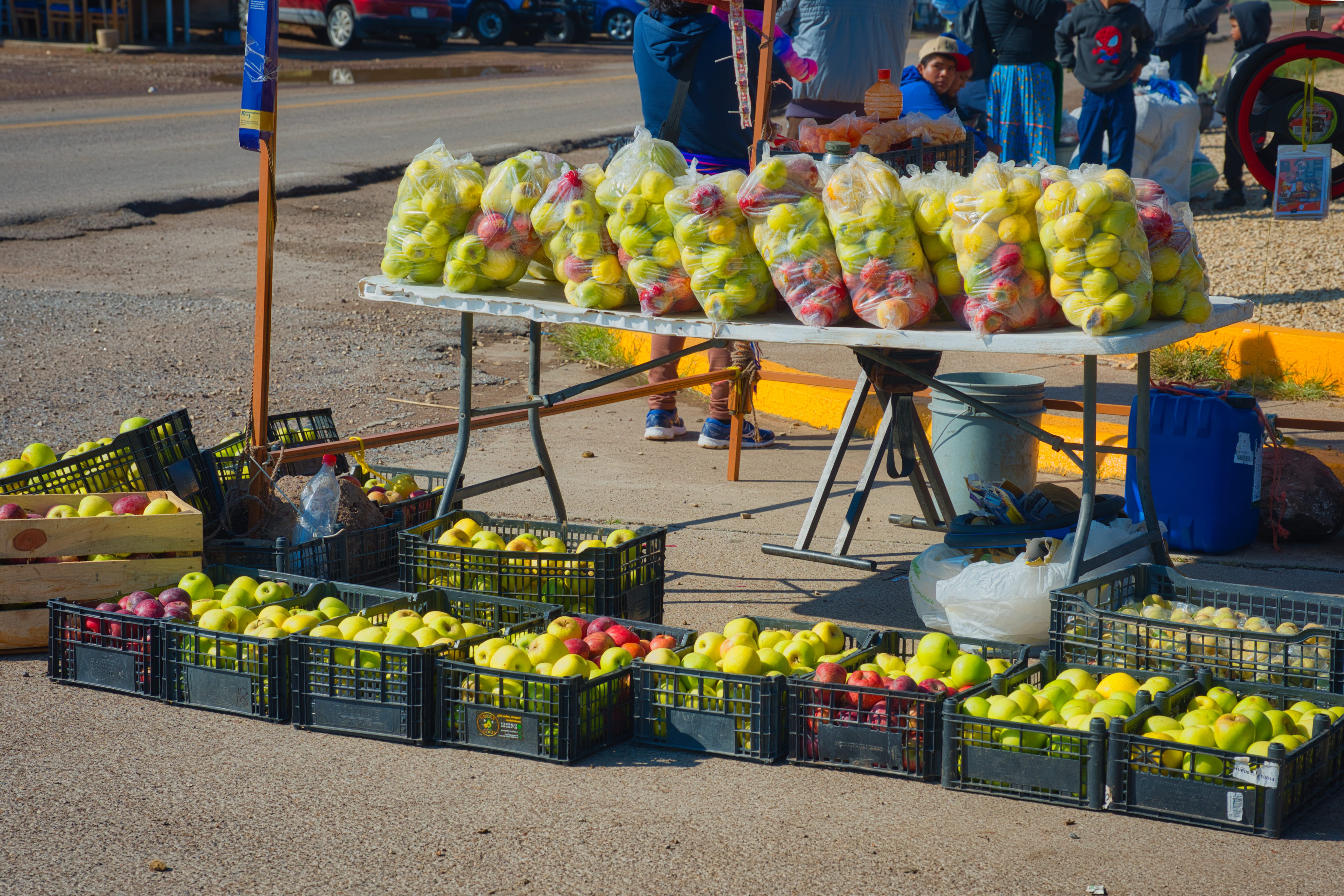
It’s apple-picking season, handled by Rarámuri (Tarahumara) women who’ve journeyed in from their mountain villages. Apple orchards here are sprawling, not the pretty bucolic scene you might remember from growing up. Instead, the trees are covered with a fine black mesh to stop hail damage, sunburn, heat stress, and bird pecking. And blocking insects. Didn’t know the harmless little apple had so many enemies
.
The orchards give way to a swooping road gently climbing into the foothills.
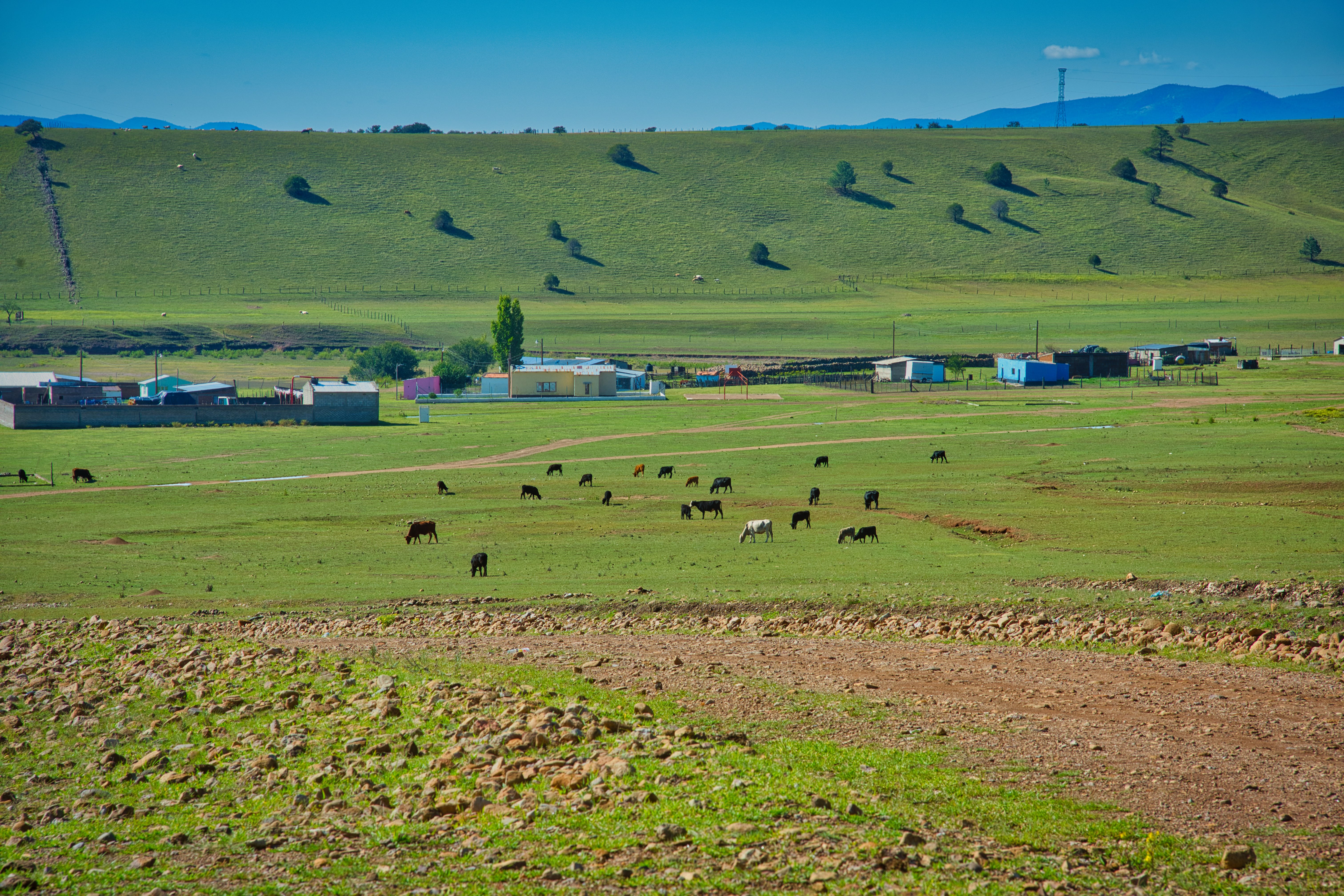
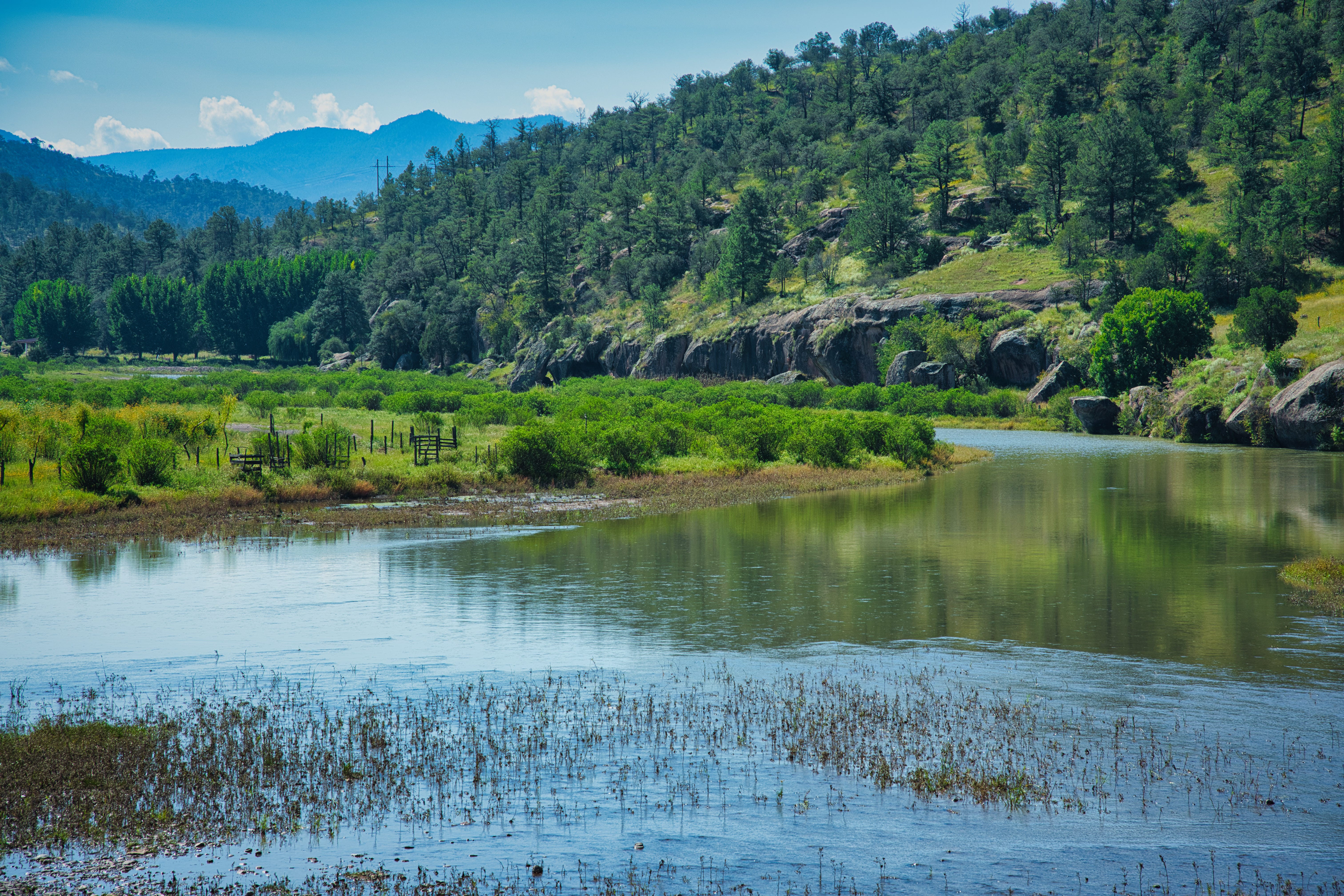
Then, after a handful of corners, I was in the Sierra Tarahumara (named for the Rarámuri/Tarahumara people who settled here). It’s a geographic subdivision of the Sierra Madre Occidental. I began seeing numerous mountain streams running full through meadows. Crystal-clear water runs over polished rocks, with wildflowers scattered among the young green grasses. I could have been in Montana. But I’m glad I was in Mexico. A good place to be at a good time of the year.
The popular draw here is Cascada de Basaseachi. At 246 meters (800 feet), Basaseachi is described as Mexico’s highest permanent waterfall. Many gush about the lush surroundings and roaring falls; it’s rainy season, and it’s at peak show-off mode, because waterfalls are all about grandstanding.
But I did not go to the falls. The plan was to spend the night, hike, and see the falls from the top, the bottom, and in between. Then, the night before, I had a meeting with myself where I identified this potentially frisky problem of Hurricane Polo. The storm was due to hit Guaymas the same day I was. So I scratched Basaseachi and pushed through to Yécora, putting me in Guaymas a day ahead of Polo. For once I’d be gringo early, which I abhor, but it beat meeting a hurricane on a motorcycle. I could drop the bike anchor and hunker down, whatever that means, in Guaymas.
So, this was a full day of riding. And taking photos. It felt like I stopped more than I rode on this high mountain road. It was narrow, sometimes great pavement but mostly a degraded, crumbling, potholed shit. There were no shoulders anywhere. Dense foliage made it feel like a green-walled tunnel.
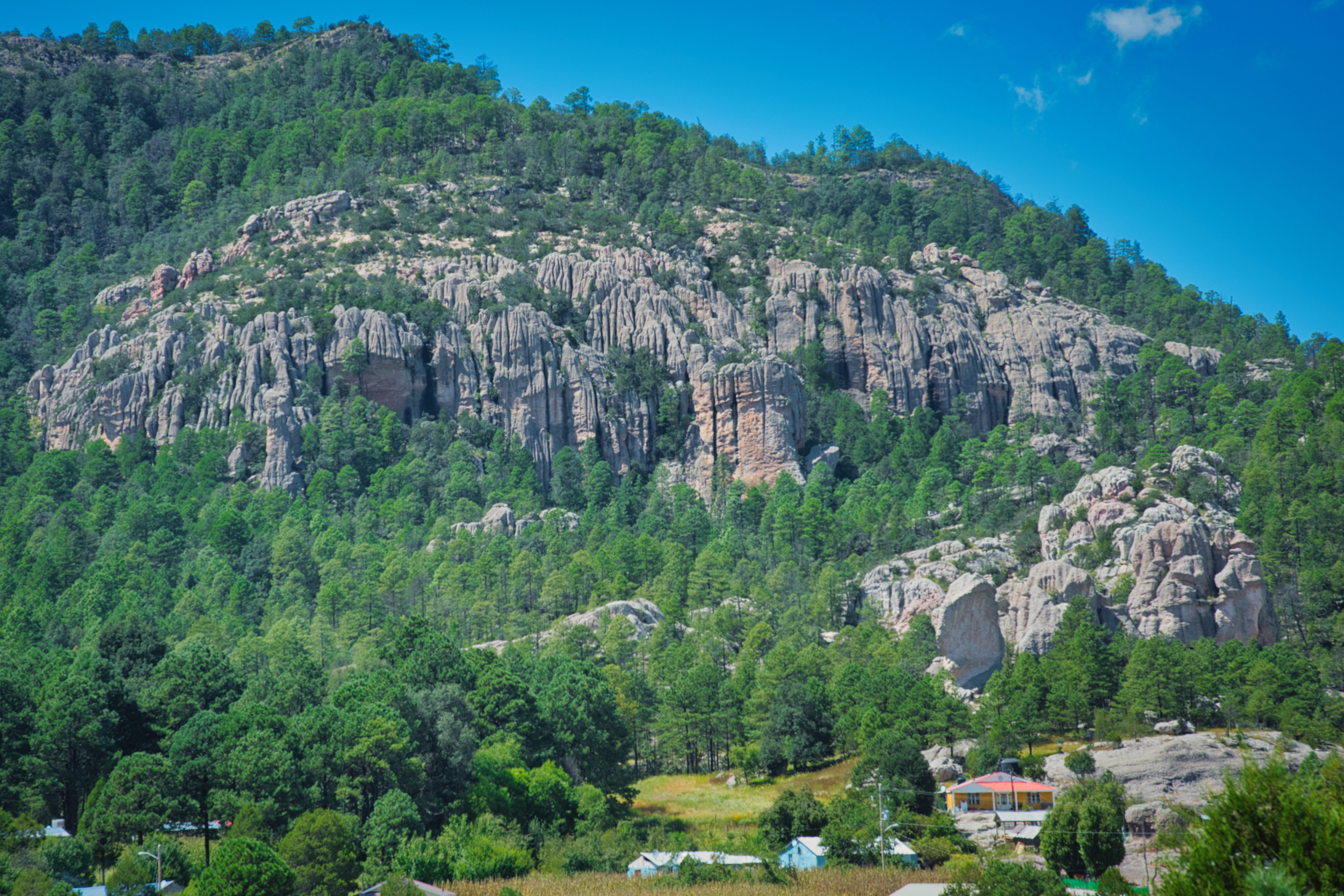
I was aware in some situations that the perfect shot was near a home, maybe a home whose owners might not want to be in public view. Being in deep cartel country, I played it cautious and dialed back my Max Ehrmann “right to be here” attitude. (If you aren’t familiar, read his poem; it’s good if naive).
So, when a great view appeared, I just stopped along the rightmost part of the right-hand lane and took my photo. Some might consider it a bit dangerous, but you gotta get your shot. That’s the point of this trip. Get what you are going for.
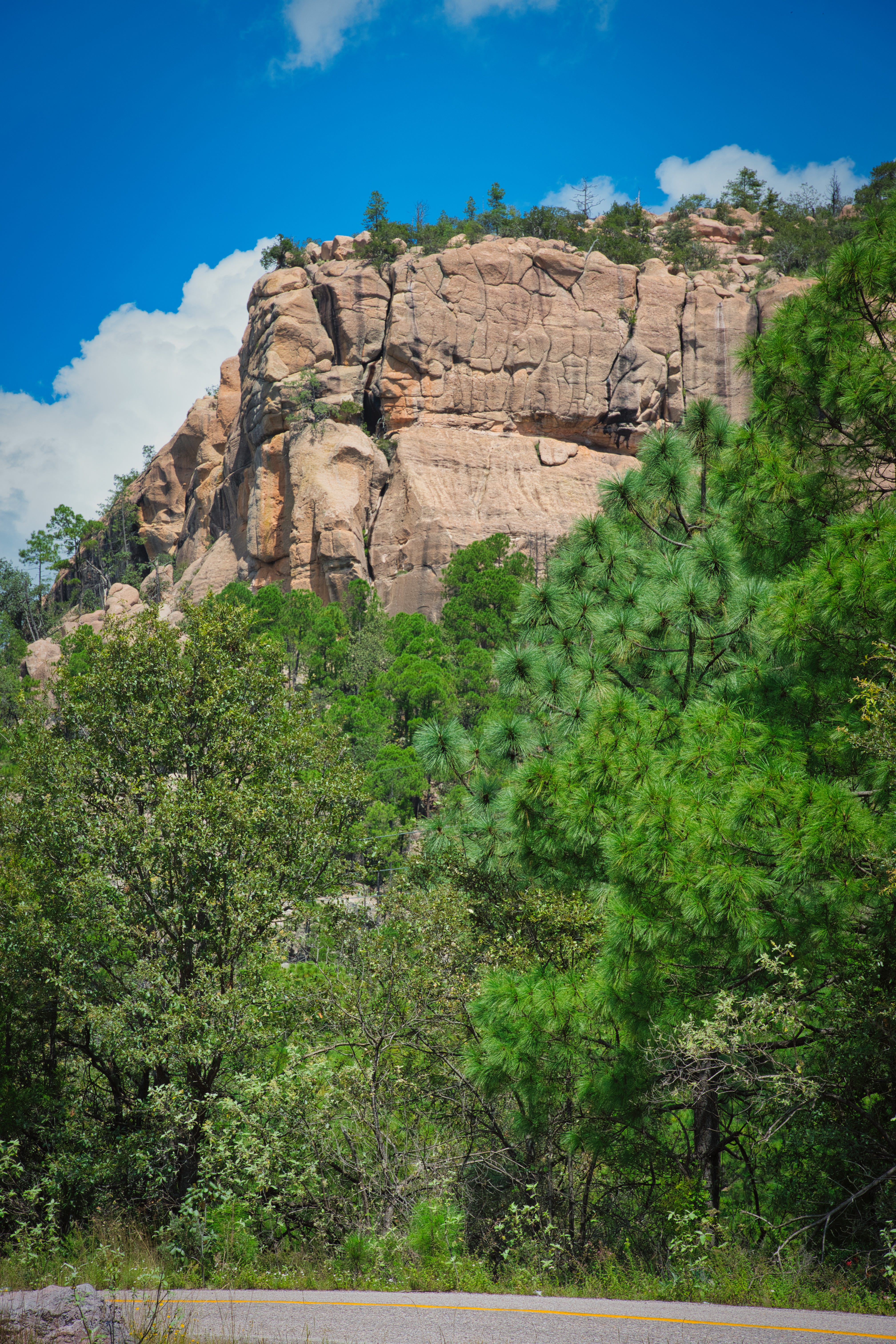
About halfway between Basaseachi and Yécora, I reached the town of Yepachic, which matters for two reasons. First, it was my northernmost point on this trip. It is also one of the two principal cultural and residential centers of the Mountain Pima, who call themselves O’ob, in Chihuahua. The old Spanish mission church is still open for business.
Not much activity there; I moved on to Maycoba, another Pima center, now across the line in Sonora. The Pima have sadly become a minority in their own homeland. It was almost exclusively Pima in the 19th century, but lowland Mexicans have migrated into the area, taken advantage of them, and logged their pines intensively. The two groups distrust each other a lot.
But I needed some ass-off-the-seat time: a beer and a look at the village. As a full-on aside, if I’m on the cuota (freeway), the afternoon break is an Oxxo lime popsicle (paleta) eaten inside the store. If I’m on the backroads, it’s a beer from a roadside village tienda, enjoyed on a plastic chair out front while kids clamor for photos with the bike. It gives me a chance to be closer to the people whose land I am riding through.
The only place in town that I could find a beer was at the shop that sold snacks, hardware, paint, dog food, household cleaning goods, and beer. A family one-stop shop.
I squatted on a step and rested...but now here’s a major set change. A young teenage boy rode up on his old, clapped-out 125cc motorbike, with an equally clapped-out assault rifle (Cuerno de chivo) across his chest. He didn’t even glance sideways at me; he just walked into the store and did whatever business he had to do there.
A few minutes later he came out, jumped on the bike and rode off. If I spoke Spanish, I would have leaned into this situation and struck up a conversation. It wasn’t like this teenager would have turned me into Swiss cheese on the village main street. I can work in this environment. Once-in-a-lifetime chance. This kid might want to be heard and understood. Just don’t take me to a social event where I don’t know anyone and likely have nothing in common. Morbidly fearful for me. Can’t work in that environment.
As I rolled out of town, I was thinking: Too old for a toy, now in his teenage years, loaded with testosterone and ancient war armament. A man-child, more child than man. Mom must be logging double prayer time.
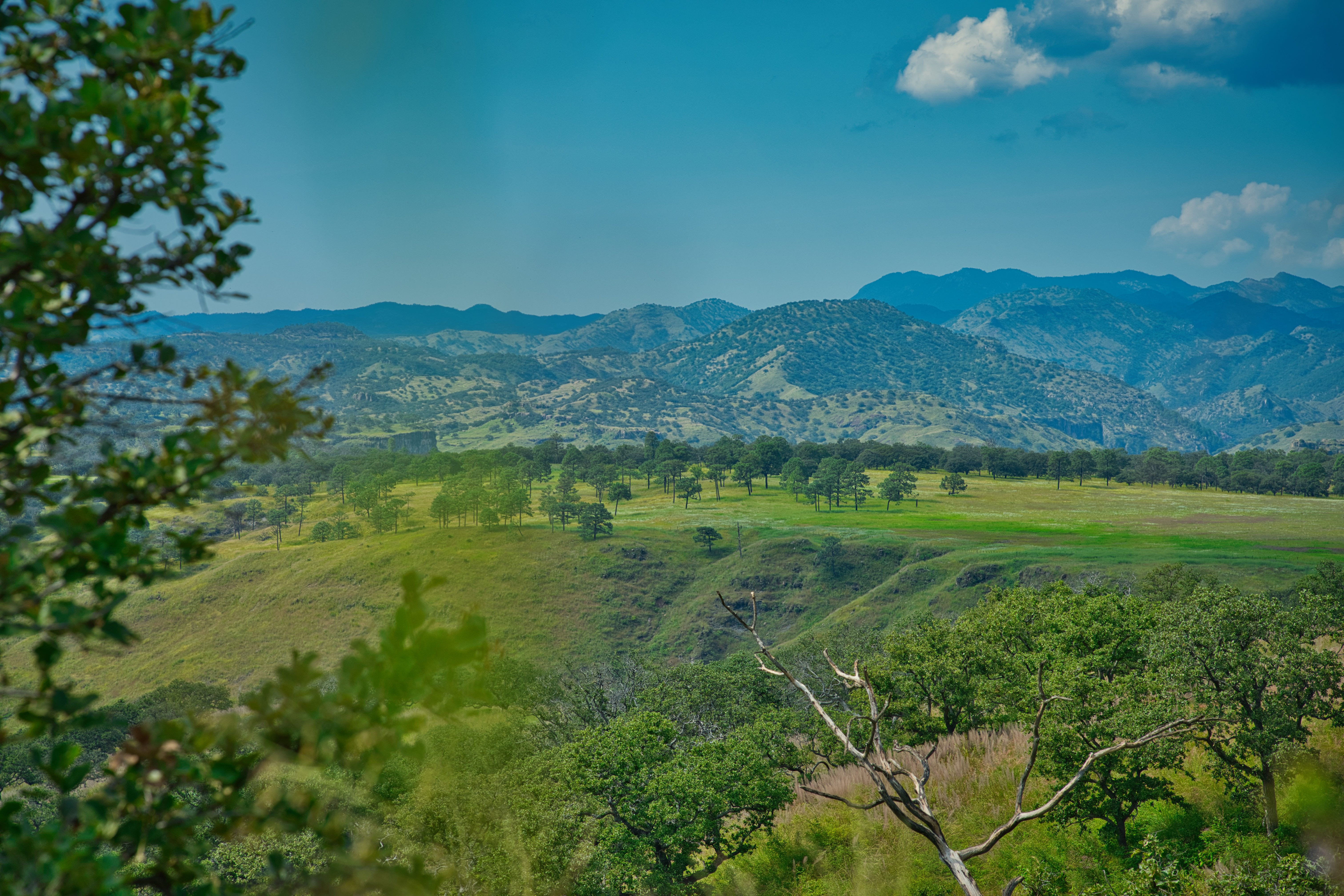
Back on my bike (notably with no accessory weaponry), I kept riding into more beauty. I got some great shots, but as with so many landscape photos, it’s really hard to capture the grandeur and reach. But I try.
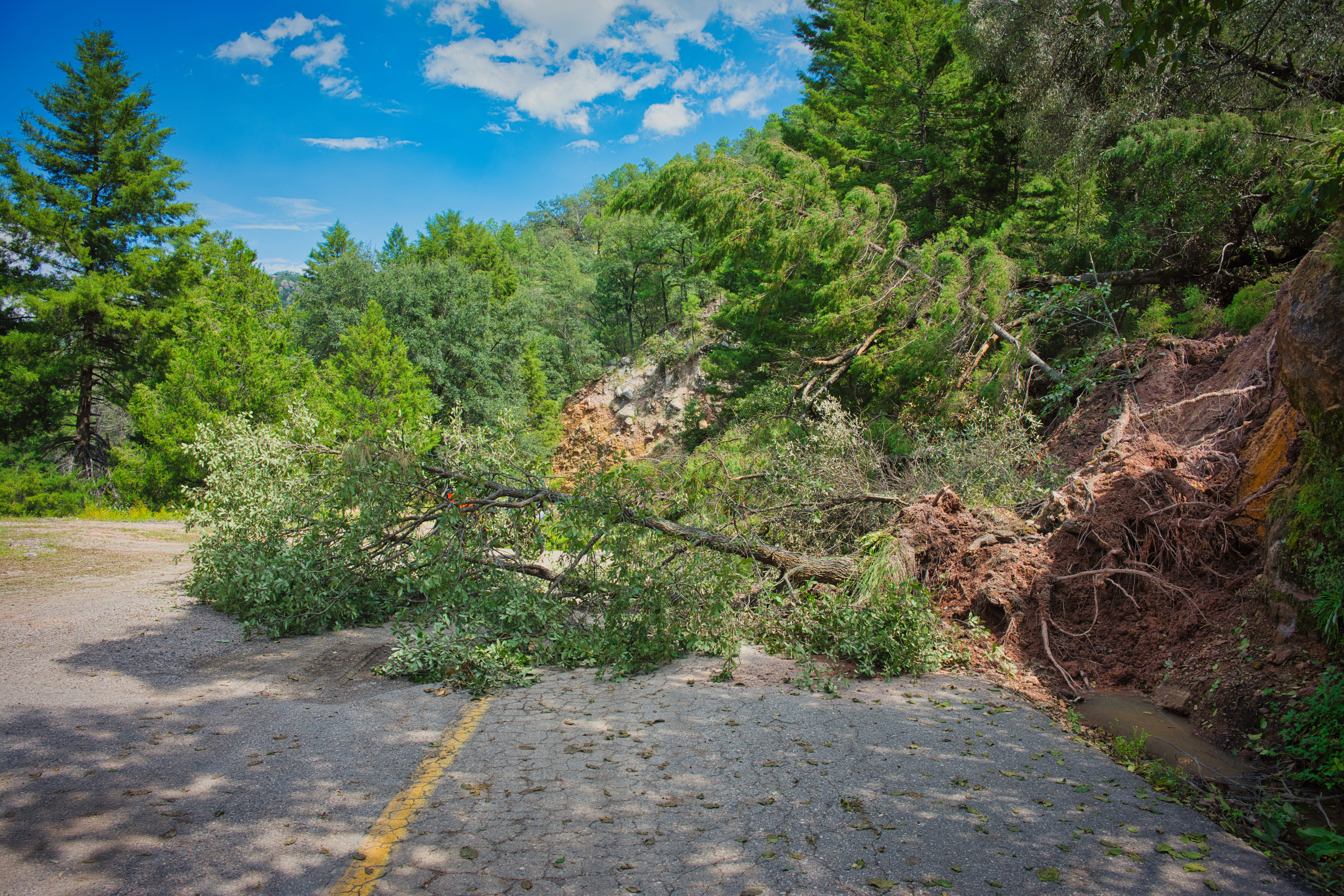
Around a corner, I abruptly ran into a “Trees Down”. After heavy monsoon rains the last week, a small landslide on the hill above the road left two trees splayed in the middle of the road. Fortunately, that corner did have a turnout, so it was easy to get around them. A couple of people stopped and asked if I was okay as I walked around, taking photos like some zombie in full, armor-plated, weirdo gear. The trees might still be in the middle of the road; I’ll never know.
Yécora had four hotels, three closed for what I’m sure was “seasonal maintenance”. I arrived at the remaining choice, badly timed, 90 seconds after a mountain deluge. Two young teenage girls (one of whom may not yet have been a teenager) welcomed me and worked to check me in and check my credentials. This is always barrels of giggles from the girls, the older onlookers, and, of course, me. The house cat observes from a safe vantage point. I enjoy the role of the aged gringo.
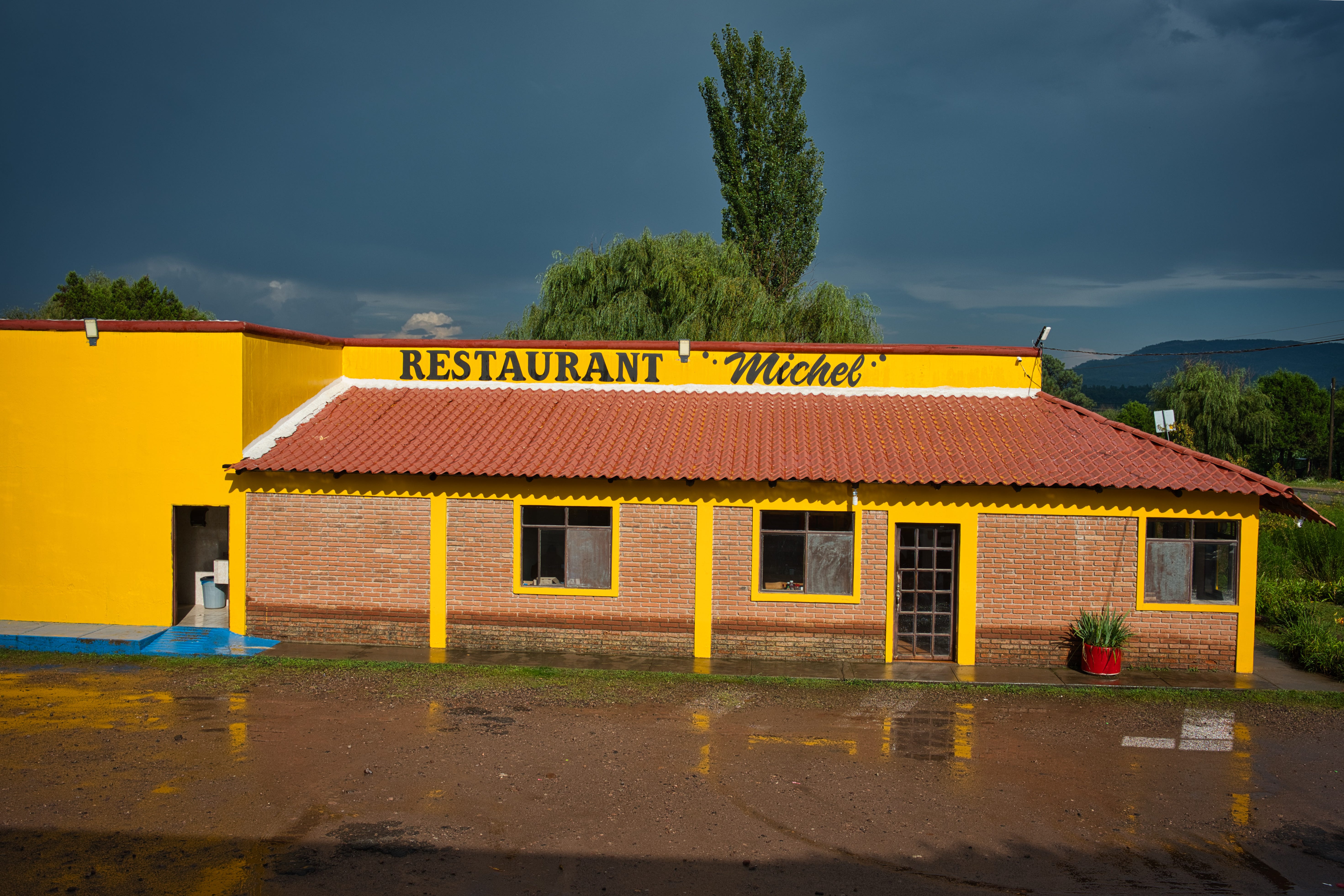
A long day of riding in and through the Sierra Tarahumara. And now I’m in Sonora, looking over the second-floor balcony of my highway hotel, the semi-trucks purring across the street; a rest stop for all: travelers, cartel dudes, and long-haul truckers. In bed, the bike protected under the eave, and an accomplished, good ride under my proverbial belt, I drift off in the mountains of Yécora.
Yécora annual rainfall: 944 mm (37”)
Altitude: 1,576 meters (5,171 feet)
Cumulative distance ridden: 2,091 kilometers
Lots of landscape photos here
Day 9 Parral, Chihuahua to Ciudad Cuauhtémoc, Chihuahua

The plan was for Cuauhtémoc to be a necessary transit point, not a destination city. Then luck intervened. All of the hotels in Cuauhtémoc are franchise boxes, all negative on the Charmometer. So I scanned Airbnb and found something promising, an “entire guesthouse,” what we in San Miguel would call a casita