


Dawn came, and that’s the daily signal to get my butt out of bed to meet the rising sun. I was going to hike up to the mirador to photograph the mountains and the town below.
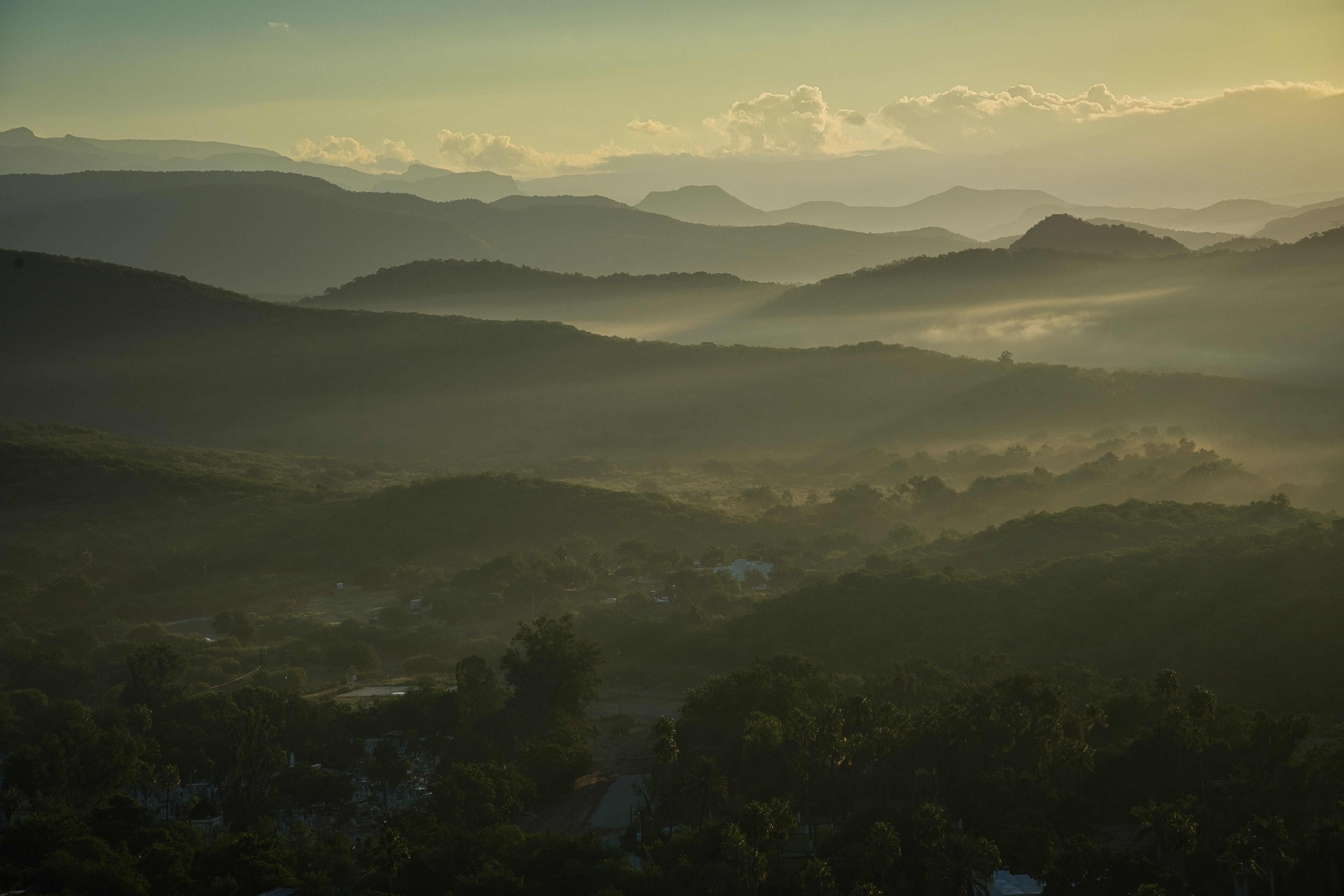
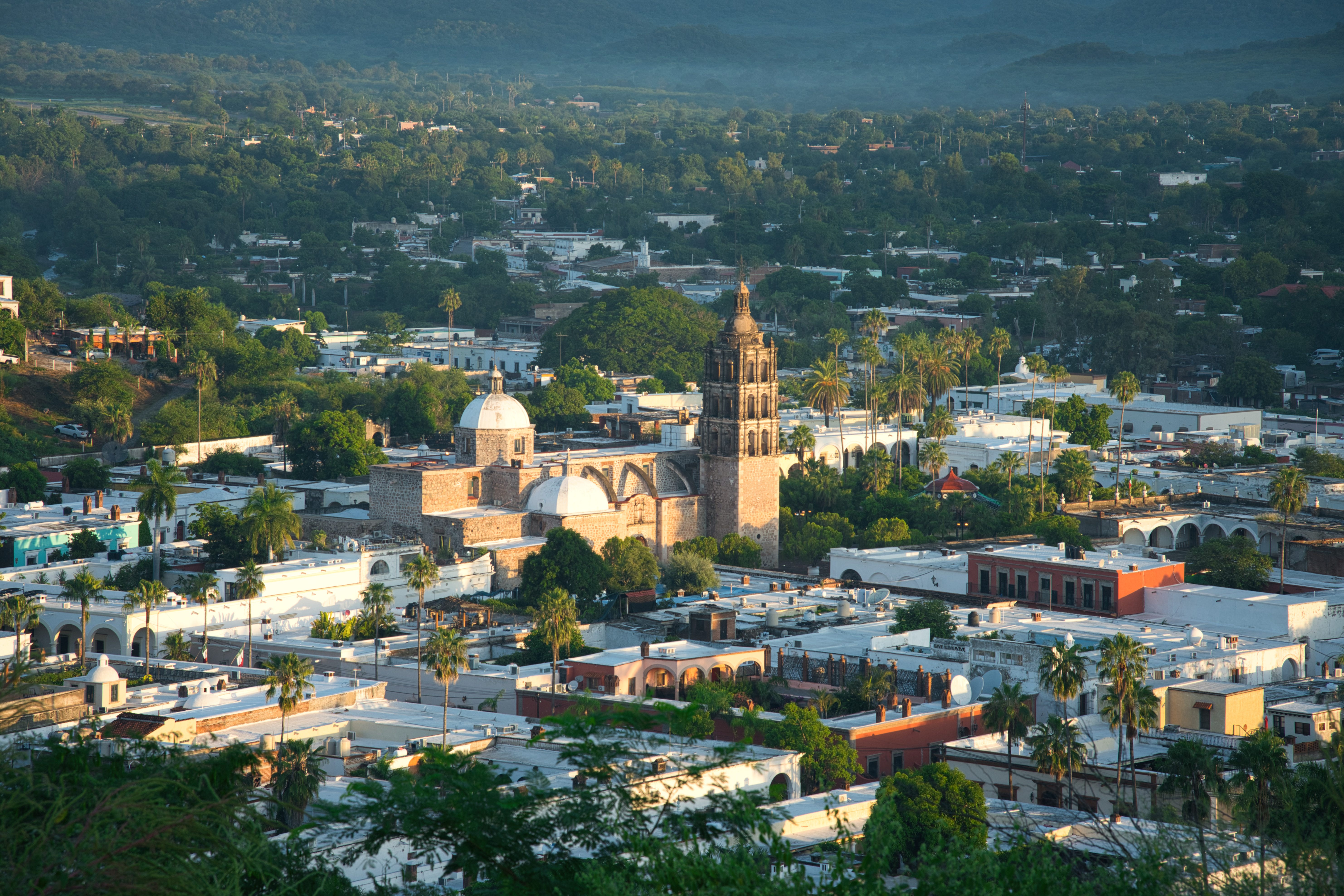
The previous day’s rain was substantial, but from my perch on the hill, I didn’t think it was flood-worthy. Bad thinking.
Travelers talk about capturing day-to-day life in small-town Mexico. I try, but some mornings I’m just photographing people running errands. Then something interrupts the routine—a fiesta, a wedding, a funeral, or, in this case, a storm. Now there’s something to discuss. Everyone was talking this morning.
Water still ran through many streets. Scattered rocks and debris showed how much higher it had been the night before.
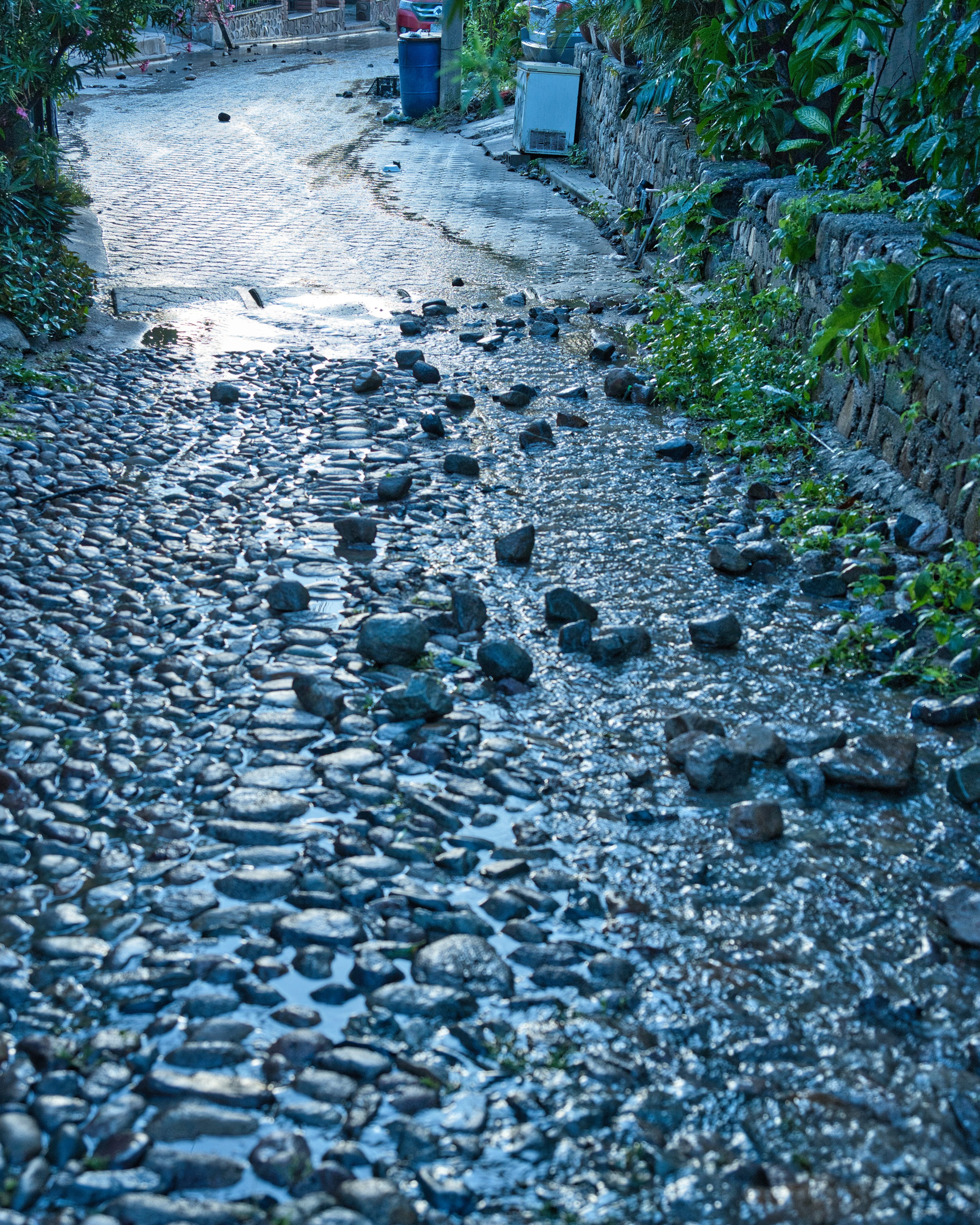
Three arroyos join in Álamos and flow to the Cuchujaqui River, on to the El Fuerte and the Pacific. Tall mountains surround the town and shed rainwater fast. This has created four historic floods. The 1868 flood took out many of the century-old cottonwoods and stone houses. In 2008, Hurricane Norbert finished the job, with vehicles ending up in trees and the remaining cottonwoods wiped out. And I just so happened to be in this place for tropical storm Polo.
I started walking toward the convergence of two arroyos and noticed quite a few people gathered there. It seemed the neighbors were having a watch party to check out the fast-moving waters. A row of homes lined one arroyo. The people there were stranded until the floodwater subsided. They seemed content watching it from their front steps.
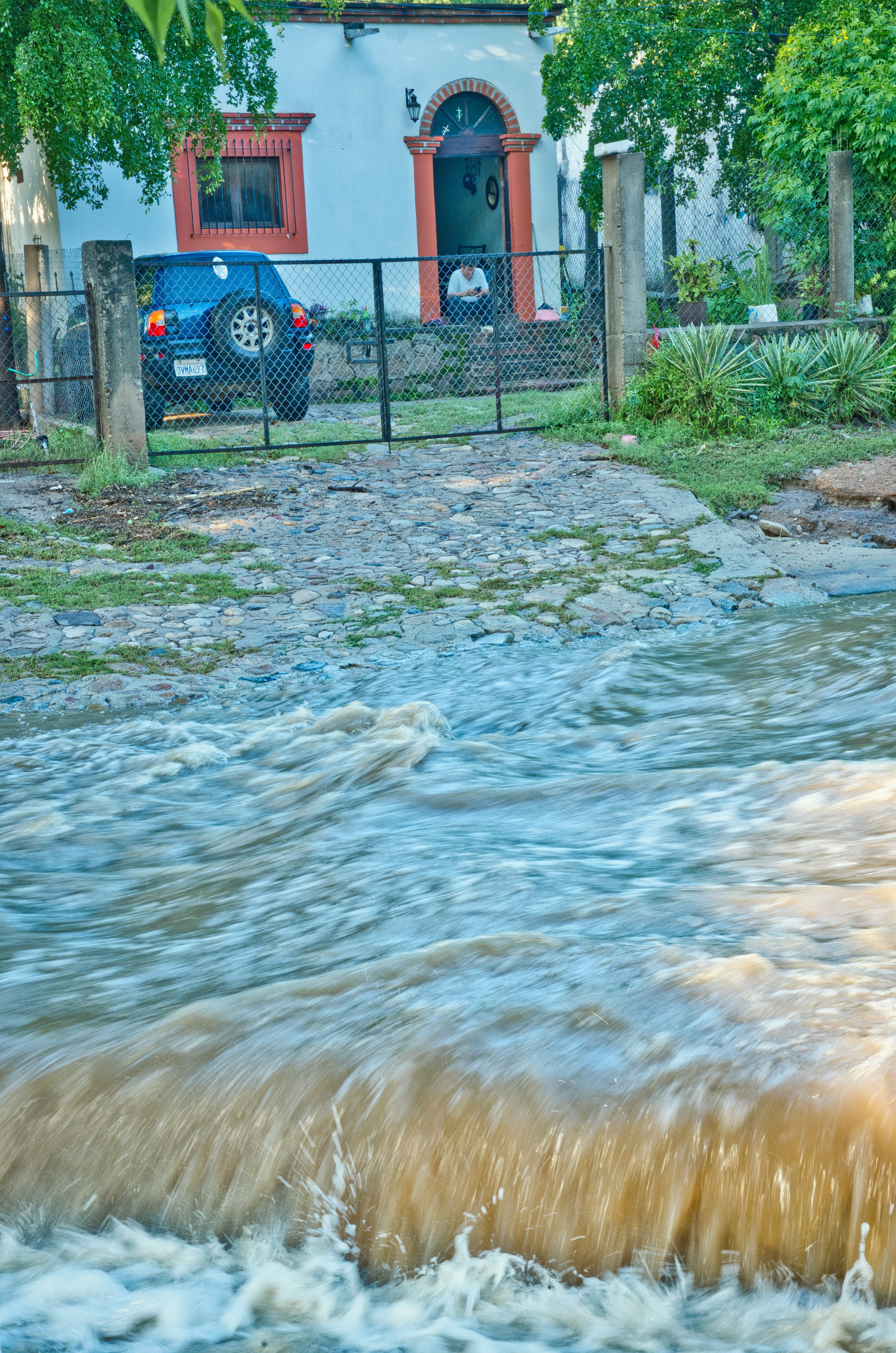
The other arroyo was larger and had more turbulent water
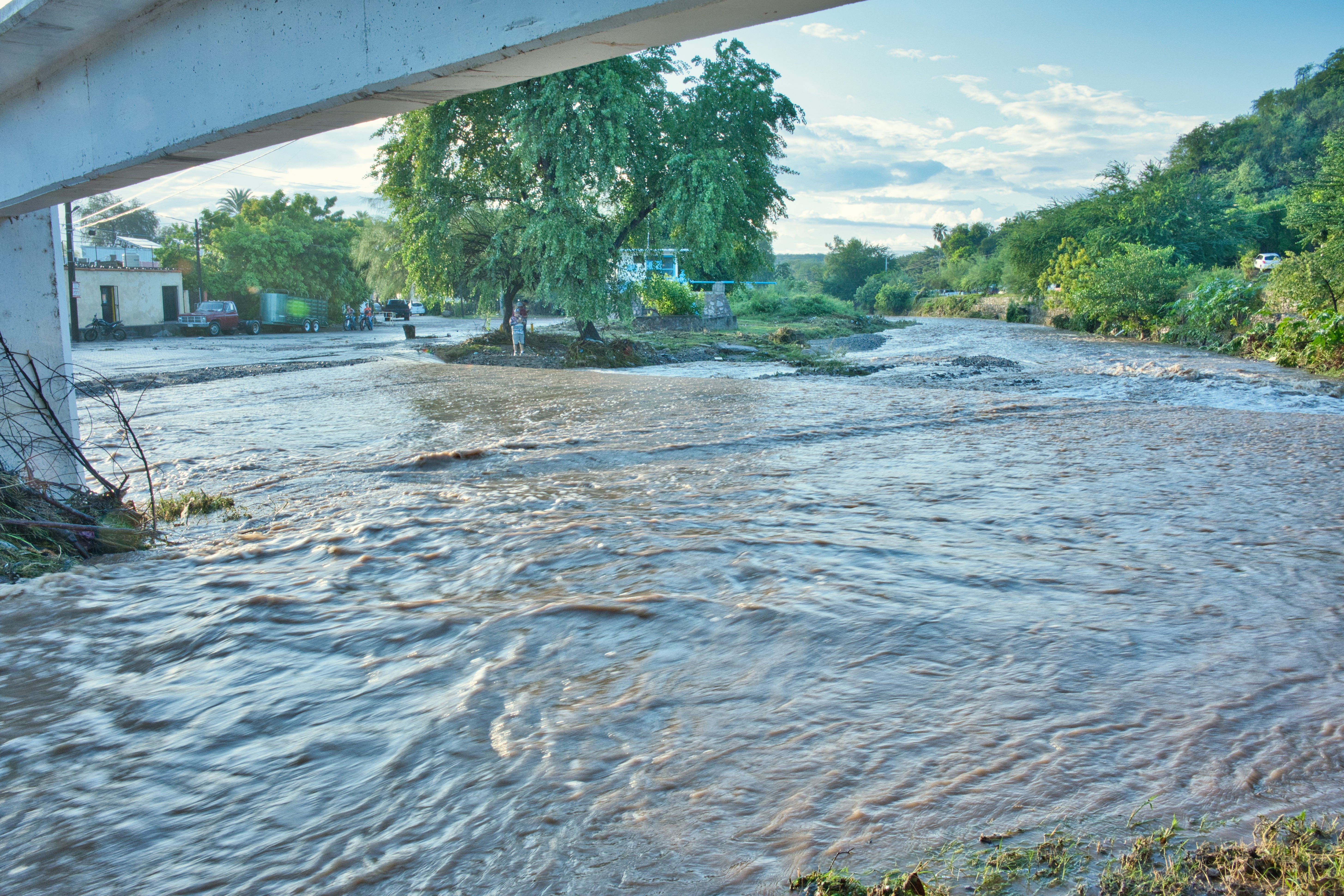
One of the town's main streets crossed this arroyo. On any other day, it would have been a dry drive-through. Today, however, it took a bit of bravery to go across. The ranchers, with their big trucks and experience driving in the campo, got out, surveyed the situation, and told the wife, “Get in, we’re going across.” And they did, slowly and sensibly.
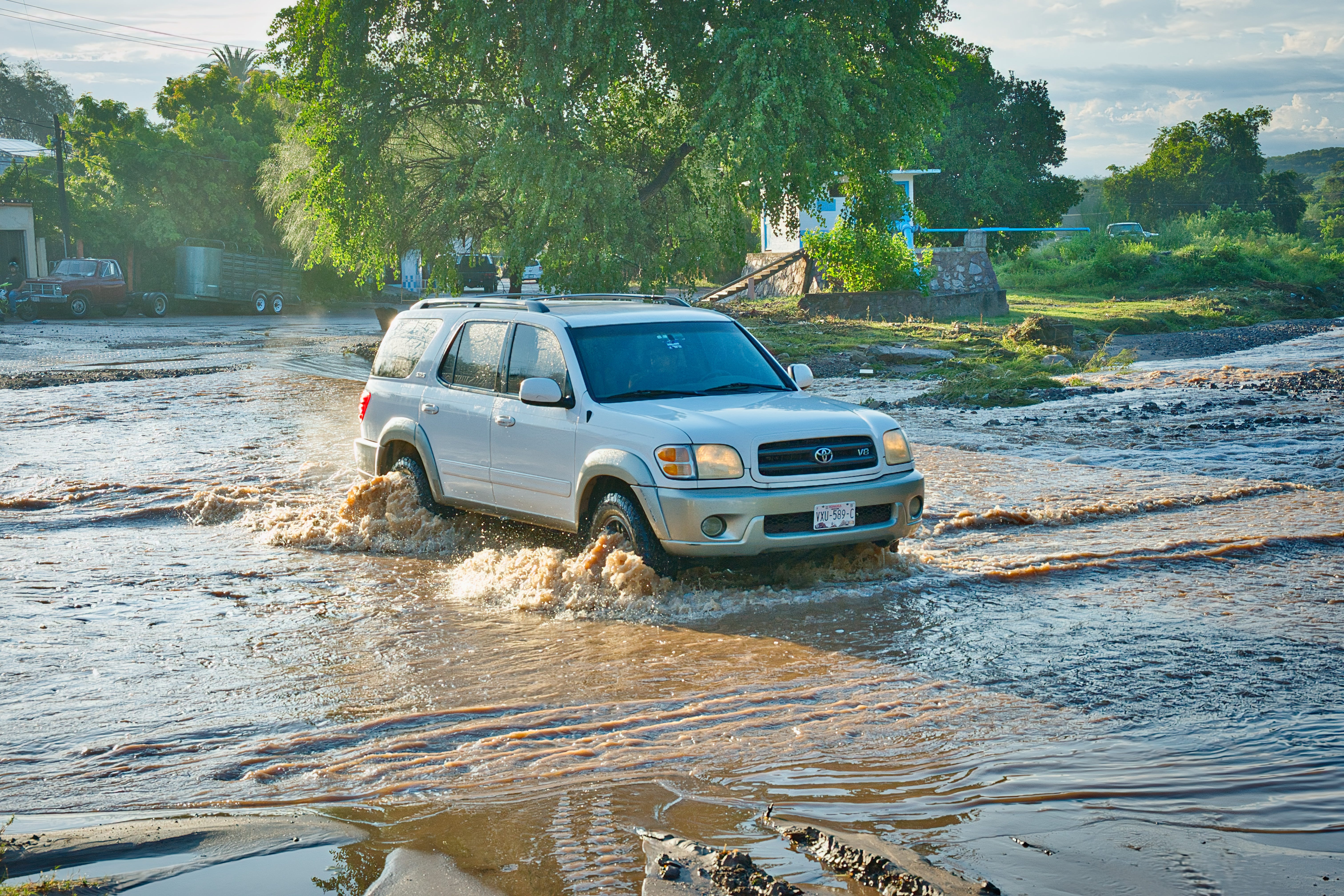
Then this guy—there’s always one of these guys—decided that if the trucks could do it, so could he. He had a small, old econobox and apparently figured speed would be his friend.
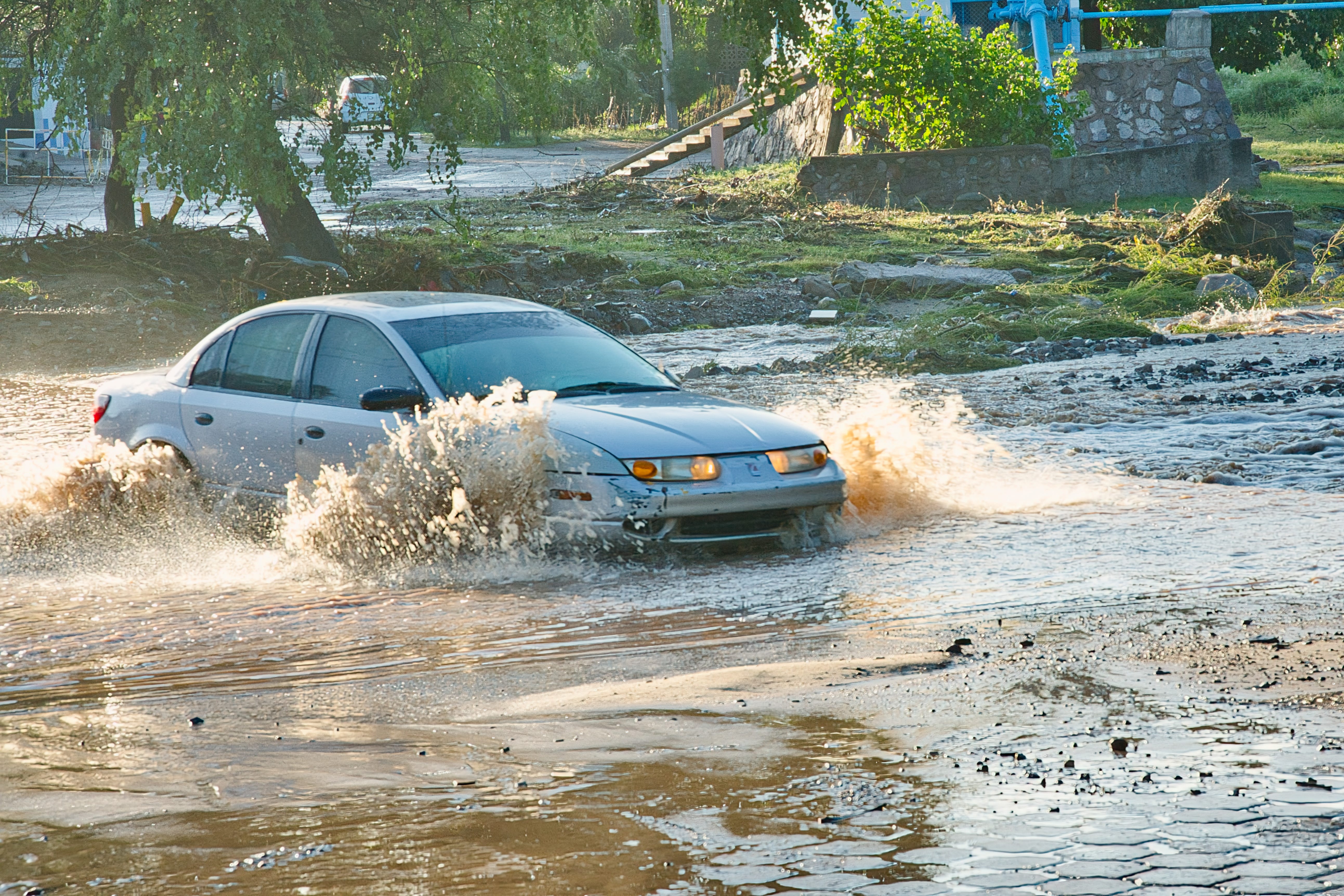
About two-thirds across, he started losing traction, and the car was going forward and sideways. Sensing a slight problem, he thought that more speed was the answer. More throttle pedal, more spinning wheels.
He made it, but not before the water tore his rear bumper loose, and it dragged noisily behind the car. There was no way he was going to stop and re-attach that bumper with some rope or wire. The spectators hooted, hollered, back-slapped, and split guts.
I envisioned thought balloons over their heads with phrases like “El Cabrón sin Defensa” (The Bastard Without a Bumper), “Capitán Titanic Arroyo” (Captain Titanic of the arroyo), and “El Vergas del Arroyo” (the arroyo badass).
It made our day.
SIDEBAR:
This is Mayo country. In their own language, they call themselves Yoreme, a word meaning “the people who respect tradition.” Mayo comes from the river, roughly “people of the riverbank.” Settlements, agriculture, sacred places, and culture developed from the river lands where these people lived.
The Spanish arrived, and it became yet another silver-rush boomtown. It has outlived its silver. At its peak, 30,000 people lived here, and for a long time much of the town, including its many mansions, sat abandoned. In the 1940s, word spread that some fixer-upper mansions were available, and Canadians and Americans began buying and restoring them. Today, a small population of expats lives here, many as snowbirds. They own a few businesses and run the charity Amigos de Educación. Professional dove-hunting lodges and a jet-rated airport add to the town’s quirk.
Álamos’s nickname is La Ciudad de los Portales—the City of Arcades. It has covered walkways, colorful columns, thick adobe-and-stone walls, and is known for its courtyards.
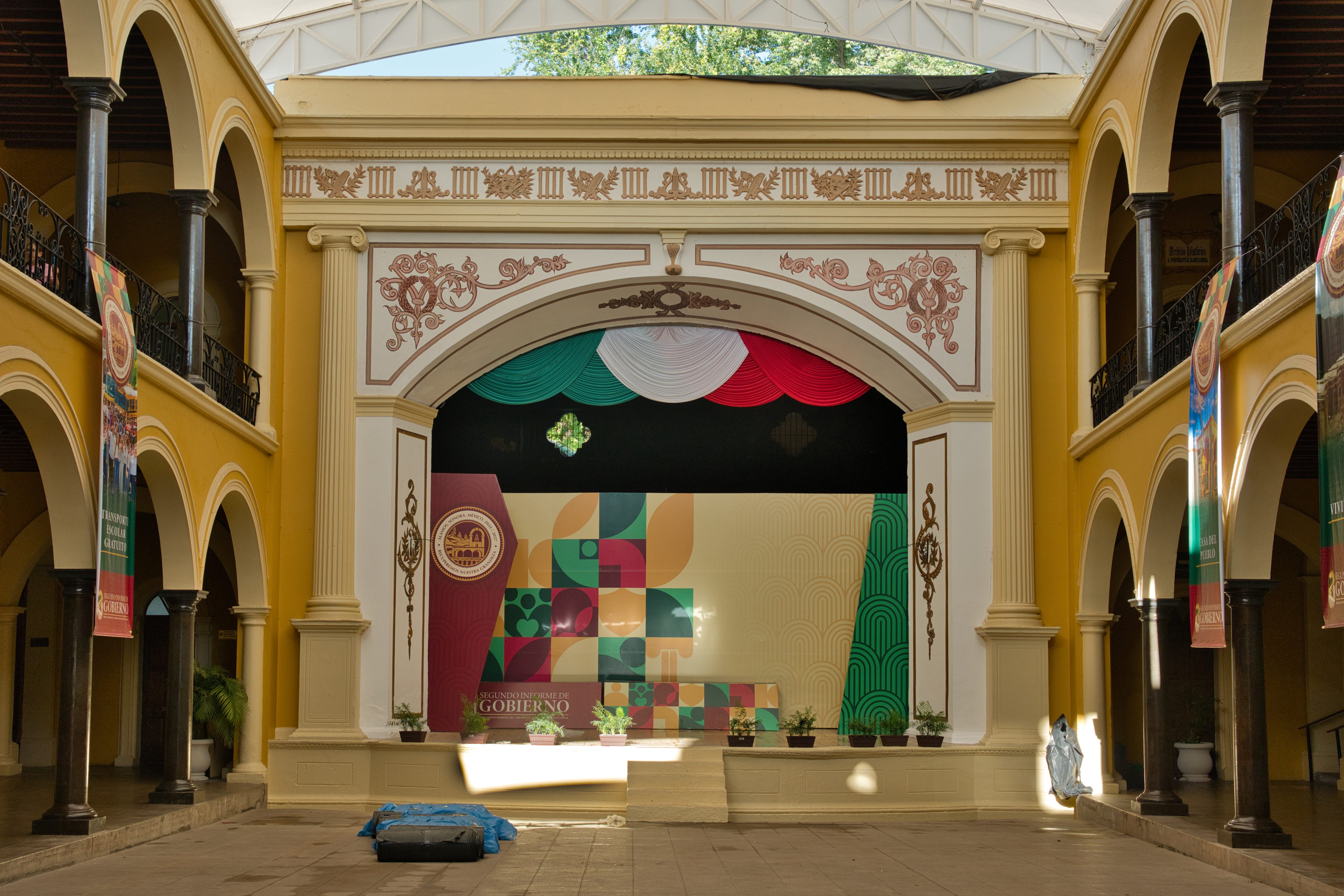
Álamos is the birthplace of María Félix, a defining star of Mexico’s Golden Age of cinema.
Another notable native was Alfonso Ortiz Tirado, who managed the unusual combination of physician to Frida Kahlo and internationally touring opera singer.
Lots more photos
Day 13: Álamos, Sonora

This was my last chance to score another Bacanora for the sidecase, as I was leaving Sonora the next day. I wasn’t going to waste it. The rains hadn’t started yet, so I squeezed in a visit to Bacanora Agua Nueva, which had a store in town.